K-12 Managed Research

Family and community surveys for K-12 districts.

Districts sit in competition for enrollment, in scrutiny during bond and levy cycles, and in the daily work of earning family trust. Two overlapping audiences drive that work. Communications directors and community relations leads measure family satisfaction. Superintendents and boards measure community perception. The same team runs both, end-to-end.

Trusted by leading school districts nationwide

  • Frisco Independent School District
  • Lamar Consolidated Independent School District
  • Fallsburg Central School District — Home of the Comets
  • Foxborough Public Schools
  • Santa Monica-Malibu Unified School District
  • North Kansas City Schools
  • Spring Independent School District

Where a custom study earns its cost

Family surveys

Satisfaction with support

Communication, teaching quality, and school support alignment.

Trust in leadership

Clear diagnostics on trust levels in school site and district leaders.

Family engagement actions

Measuring the direct actions families take when they feel genuinely invited.

Likelihood to remain

Understand the likelihood to re-enroll in a private or charter network.

Community perception

Bond and Levy cycles

Thorough perception studies engineered ahead of important bond or levy votes.

Facilities & Boundaries

Gather structured public feedback on facilities changes and boundary revisions.

Needs assessments

Comprehensive community audits tightly tied to long-term strategic plans.

Post-Incident recovery

Rapid response surveys for rebuilding public trust after negative incidents.

For a community facing more complex decisions, focus groups can add depth and richness to survey data. Focus Groups

A survey every family can actually take

Instruments in 60+ languages, delivered by email, text, and paper, so results reflects the whole community rather than just those with the loudest voices.

This is where the platform's translation capability and administration methods becomes the difference between a representative reading and a self-selected one.

Parent survey questions for back to school and end of year

Two seasonal windows most districts field. We build separate instruments, because the questions a family can answer well in September are not the same questions they can answer well in June.

Back to school

  • Preparedness: How prepared did you feel entering this school year? Anchor for the transition experience.
  • Communication: How well did the school communicate what to expect this year? Measured as experienced, not as planned.
  • Access Comfort: How comfortable are you asking your child's teacher a question? A key predictor of real engagement.
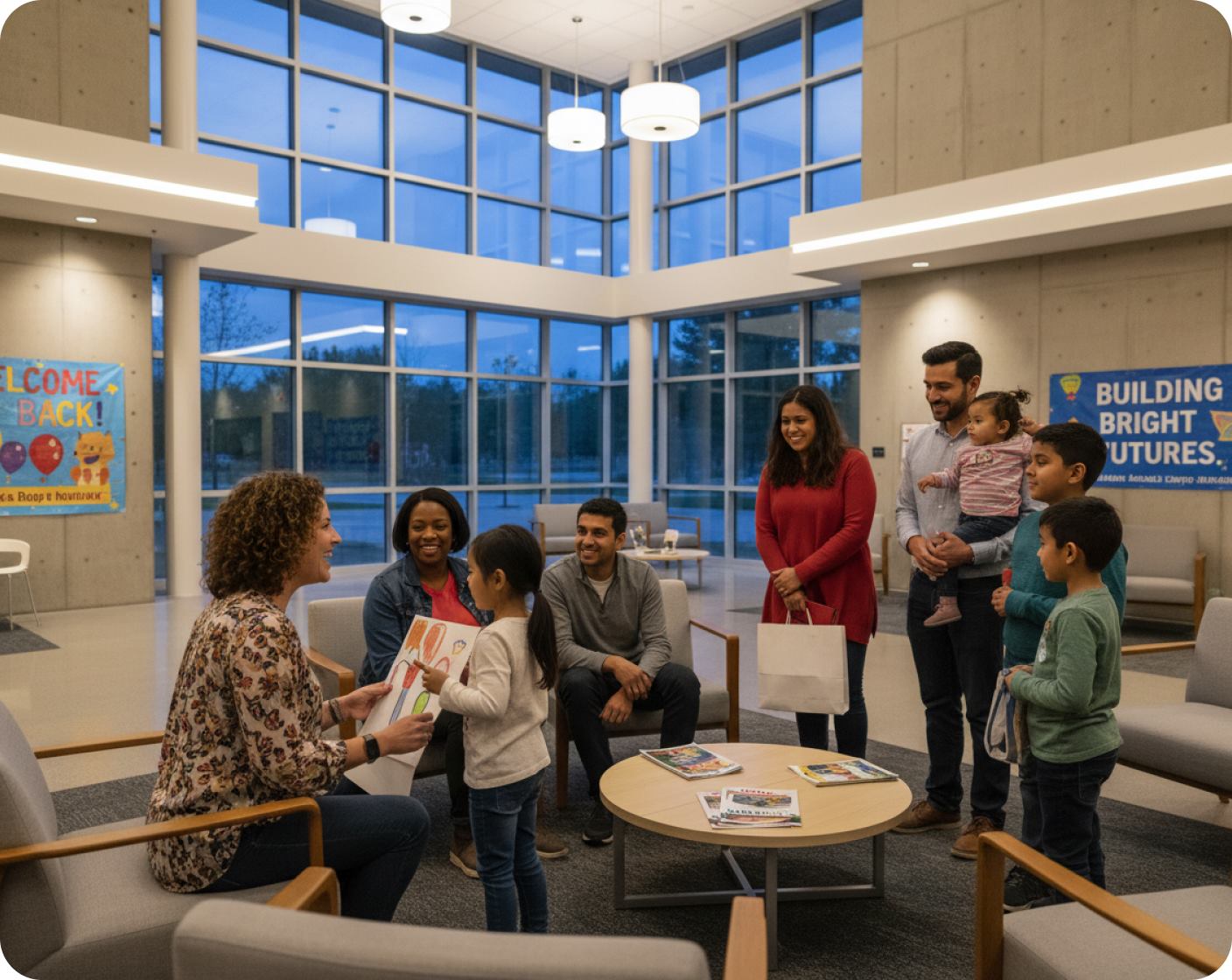
Families and staff talking together in a school lobby under a welcome back banner
School community seated in a circle outdoors for an end of year community chat

End of year accountability and advocacy

End of year

  • Learning Support: How well did your child's school support their learning this year? Benchmarked nationally.
  • Progress Feedback: How well did the school communicate about your child's progress? Drives trust in the grades.
  • Word-of-Mouth Advocacy: How likely are you to speak positively about this school to another family? The ultimate enrollment insurance.

The retention finding a superintendent should not miss

In our 2025–2026 Family Priorities study, 100% of families who had already decided to leave their school reported providing input to the school in the previous twelve months. Among families staying, 79% had.

FAMILIES LEAVING DISTRICT

100% Provided Input

Had warned school teams before exiting

FAMILIES STAYING IN DISTRICT

79% Provided Input

Typical baseline engagement rate

Families do not leave without warning. They leave after they have communicated, and after the loop did not close. That is the pattern the survey program is designed to catch.

Related K-12 resources

The three needs we hear most

Curated Community Feedback

Ready to get started?

Partner with our specialized K-12 research division. Get survey methodologies backed by statistical rigors and compliant standards.

FAQs about K-12 family and community surveys

What can K-12 family and community surveys help a school district understand?

add_2

Two different things, mostly. A family survey tells you how parents rate communication and teaching, and whether they trust their principal and the central office. Community surveys are for the big public moments, like a bond vote or a boundary change people are already arguing about.

What questions should a school district ask parents in a family feedback survey?

add_2 remove

Whatever a parent can answer well that month. A mom in September can tell you whether she felt ready for the year and whether she’d email her son’s teacher with a question. She can’t judge his progress until June, which is also when you ask whether she’d recommend the school to a neighbor.

When should a district conduct parent and community feedback surveys?

add_2 remove

Twice a year for families, usually: the first weeks of school and the last. Community surveys run on a different clock. They go out before a bond, levy or boundary vote, or soon after something rattles public trust.

How can family survey findings support school district decisions?

add_2 remove

They show you who’s about to leave while there’s still time. In our Family Priorities study, every family that had decided to leave had given the school input in the past twelve months, and the loop never closed.

How can school districts encourage more families to participate in surveys?

add_2 remove

Ask in the language they speak at home. Some parents will answer a text on a lunch break and never touch an email link, and a few still want paper. We send surveys in 60+ languages by email, text and paper, which is how the quiet families end up in the results.

Client

Company Size

Industries

Customer Since

Read more

Typical Rave Review

Description