Unexpected Survey Data
A survey result that surprised you or split sharply across groups






A survey result that surprised you or split sharply across groups
A boundary or facility decision facing community resistance
A leadership search where the board wants to hear the community directly
A program where the experience matters as much as the outcome
A bond or levy that failed and a district that needs to understand what drove the vote
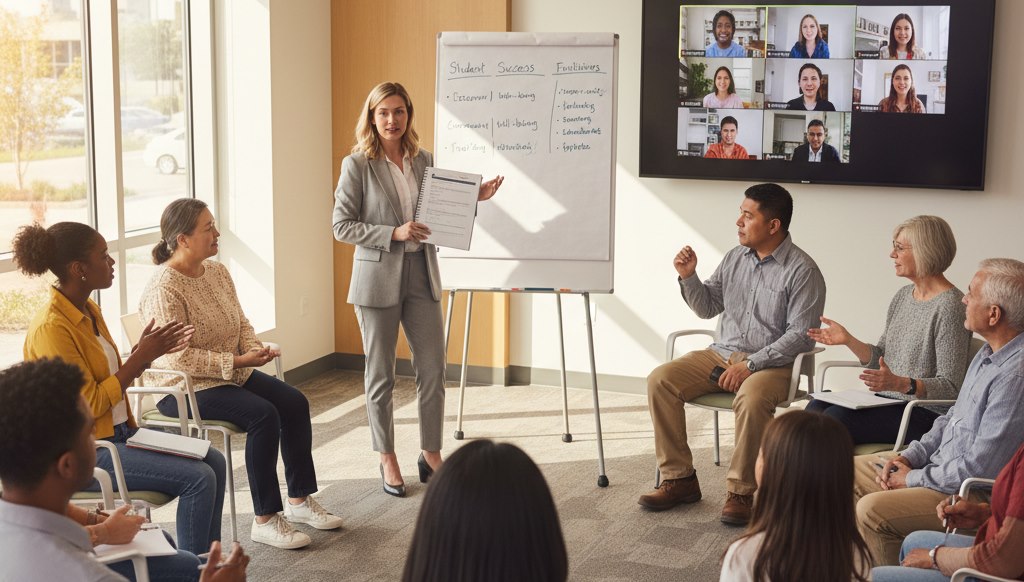
Parents and staff speak more openly to an outside facilitator than to their own administrators. A trained researcher crafts the right questions to solicit honest, rich responses and gives space to the quieter voices in the room.
Those two things are the reason a district hires this out. District leaders already hear the loudest voices – this report reflects the depth of all positions in the room.
Protocol tied to the district's needs Prompts that ensure neutrality in facilitation and depth from all opinions in the room. Recruitment that reaches beyond the usual responders, including families who typically do not attend school events.
In-person and virtual sessions, matched to the audience. Skilled moderation. Structured thematic analysis afterward, so the output is a set of findings, not a transcript dump.
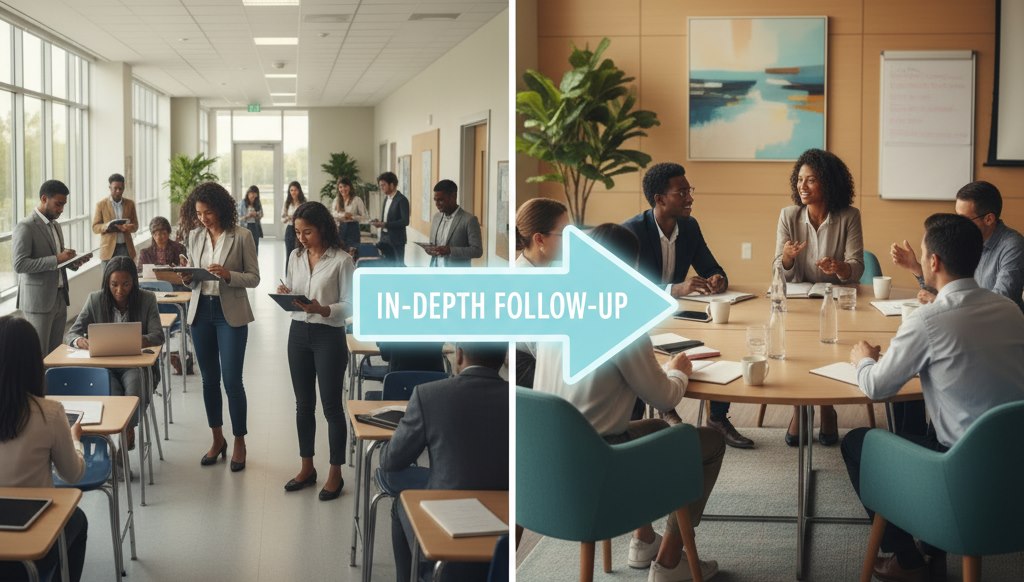
The two methods work in sequence. A survey sizes the issue across the whole population. Focus groups unpack depth and context. A district that runs both learns more than a district that runs either alone.
Learn about Focus Group arrow_forwardA thematic summary with representative voices, findings tied back to the original need, and recommendations a leadership team can act on. Themes are reported without exposing individual participants, so the confidentiality promise made at recruitment holds through publication.


Qualitative work follows a research standard. Structured protocols. Systematic thematic analysis. Confidentiality. That is what makes focus group findings hold up in front of a board the same way survey results do.
Learn about to Our Methods arrow_forwardWhen a climate survey shows a drop in one middle school and a rise in another across the same district, focus groups tell leadership what the two experiences are actually made of, before an intervention gets designed off the wrong assumption.
Most action plans begin with seeking more data to better understand the root causes of specific data points. Focus groups give district and school leaders insight into what actions will change the right root causes.
When a district considers a school closure, a boundary shift, or a bond, focus groups in the affected neighborhoods produce input a mailer never gets. Communities that were heard early, in the format they trust, vote differently than communities that heard about the plan from a flyer.
A failed vote is a message the board received without the reasoning attached. Focus groups produce the reasoning, in the voices of the people who voted no, and give leadership a defensible read on what to change before the next attempt.
Focus groups sit at the front of a planning cycle, when the district wants themes it can carry into the sessions, and at the back, when priorities need to be pressure-tested with the people who will live with them.
Curated Community Feedback
Partner with our specialized K-12 research division. Get qualitative focus group methodologies backed by statistical rigors and compliant standards.
To find out why. A survey can show that belonging scores fell at one middle school. Get a dozen of those kids talking with a good facilitator, and someone might mention the new lunch schedule that split their friends up.
Usually right after a result nobody saw coming. A board that lost a bond vote by a few hundred votes learns more from an hour with the people who voted no than from another poll. Boundary plans and superintendent searches get the same treatment.
Anyone the decision affects, from a sophomore to the bus driver to a retired neighbor with no kids in school. We go looking for the families who skip back-to-school night, because they rarely end up in a room like this otherwise.
Both work. An evening video call might suit working parents, and an after-school session in a classroom might suit teachers. Whatever the setting, the facilitator comes from outside the district, and a mom will tell a stranger things she’d never say to her kid’s principal.
You get the themes, written up with quotes so the board hears people in their own words. Every one ties back to the question that started the project, and recommendations come with it. Nobody’s name appears, since that was the promise when people agreed to talk.

Typical Rave Review
Description