
SURVEY TEMPLATE

Utility Bill Template

Nearly every household and business manages a rotating stack of recurring bills, electricity, water, gas, internet, and more, and nearly every one of those bills gets asked for again somewhere else: a bank verifying an address, a landlord processing a lease, a business reconciling monthly expenses. This Editable Utility Bill Template from Sogolytics gives you a clean, professional layout for creating accurate, consistent utility bills, whether you're a service provider issuing statements, a property manager tracking tenant charges, or a business creating internal billing records.
Build the layout once, adjust the details for each billing cycle, and produce a polished, accurate bill every time, no design work, no starting from scratch, no inconsistent formatting from one month to the next.

G2 Review Badge – Sogolytics Rated 4.7 Stars 4.6 Star on G2
Capterra Review Badge – Sogolytics Rated 4.7 Stars 4.7 Star on Capterra
  • check_circle GDPR Ready
  • check_circle Real-time Reports
  • check_circle SOC 2 Type II Certified
  • check_circle HIPAA Compliant
assignment
SURVEY CATEGORY
Financial Services
nest_clock_farsight_analog
TIME TO COMPLETE
7 minutes (approx.)
help
NO. OF QUESTIONS
14

What is a Utility Bill Template?

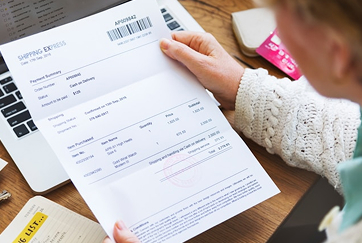
A Utility Bill Template is a pre-formatted layout for presenting the details of a utility charge, service type, account information, usage, rates, taxes, and amount due, in a clear, standardized structure. It provides the framing, field labels, and layout so you don't need to design a bill from nothing each billing period.

It's worth being direct about something important: a Utility Bill Template is a design layout, not an official statement issued by a real utility provider. It's meant for legitimate business use, such as a utility company, property manager, or internal finance team generating real bills for real accounts, or for training, sample, and demonstration purposes. A completed template should never be used to fabricate or misrepresent a utility account, and should not be submitted as proof of address, identity verification, or documentation for a real utility account unless it reflects an actual, current account with a real provider.

The advantage of an Online Utility Bill Template is consistency. Once your layout, fields, and calculations are set, every bill you generate looks uniform and captures the same information, which matters when you're issuing statements to many customers or tenants on a recurring basis.

Types of Utility Bills Every Home and Business Should Know

Before building a bill, it helps to know the different categories of utility charges a household or business typically manages. Each type carries slightly different fields and units of measurement.

  • .Electricity Bill
    Covers power consumption, usually measured in kilowatt-hours (kWh), and often includes tiered rates, time-of-use pricing, and delivery or supply charges billed separately.
  • .Water Bill
    Tracks water usage, typically measured in gallons or cubic feet/meters, and often includes separate line items for water supply, sewer service, and stormwater fees.
  • .Gas Bill
    Measures natural gas consumption, usually in therms or cubic feet, with charges that can vary seasonally based on heating demand.
  • .Sewer and Trash Bill
    Covers wastewater treatment and solid waste collection, frequently billed as flat monthly or quarterly fees rather than usage-based charges.
  • .Internet and Cable Bill
    Bills for internet, television, or bundled services, generally structured as flat-rate charges with add-ons for equipment rental, premium channels, or data overages.
  • .Combined or Multi-Utility Bills
    Some municipalities and property management companies issue a single bill covering several utilities (water, sewer, trash) together, consolidating multiple charges into one statement.

What is Inside a Utility Bill Template?

At a high level, every utility bill template needs to answer three questions clearly: who is being billed, what they're being billed for, and how much they owe and by when. A well-structured template typically includes:

  • .A header with the provider or company name, logo, and contact information
  • .Customer and account details
  • .A summary of charges for the current billing period
  • .A breakdown of usage and rates
  • .Any taxes, fees, or adjustments
  • .A total amount due and payment due date
  • .Payment instructions or options

Keeping these sections consistent across every bill you issue makes statements easier to read, easier to audit, and easier to compare from one billing period to the next.

Common Types of Utility Bill Templates

Sogolytics offers customizable layouts suited to different utility categories and business needs.

  • .Electricity Bill Template
    Built for usage-based billing, with fields for meter readings, kWh consumed, tiered rate breakdowns, and delivery charges.
  • .Water Bill Template
    Structured around usage volume, with fields for current and previous meter readings, consumption, and separate water/sewer line items.
  • .Gas Bill Template
    Designed for therm or cubic-foot based billing, with room for seasonal usage comparisons and heating-related charges.
  • .Internet Utility Bill Template
    Formatted for flat-rate and bundled billing, with fields for service plan, equipment fees, and add-on charges.
  • .Commercial Utility Bill Template
    Built for higher-volume or multi-meter accounts, with expanded fields for multiple service addresses, demand charges, and itemized commercial rate structures.

Key Components of a Utility Bill

Regardless of utility type, most bills share a common set of components:

  • .Account Information: Account number, customer name, and billing contact details
  • .Service Address: The physical location where the utility service is provided
  • .Billing Period: The start and end dates the charges cover
  • .Utility Usage: Meter readings or consumption data for the billing period
  • .Rates and Charges: The price per unit and any tiered or flat charges applied
  • .Taxes and Fees: Applicable local, state, or regulatory charges added to the bill
  • .Payment Due Date: The date payment is expected, along with any late fee terms

How to Create a Utility Bill Template?

  1. 1.Start with the Sogolytics Utility Bill Template in the template library.
  2. 2.Select the utility type (electricity, water, gas, internet, or commercial) closest to your need, or start from a blank layout.
  3. 3.Add your company or provider branding, including logo, name, and contact information.
  4. 4.Set up account and service address fields to capture customer-specific details.
  5. 5.Build your usage and rate structure, including meter readings, unit rates, and any tiered pricing.
  6. 6.Add tax and fee line items relevant to your service area or business.
  7. 7.Include a clear total due and payment due date, along with accepted payment methods.
  8. 8.Review the layout for accuracy before using it to generate live bills.
  9. 9.Save the finished layout as a reusable template so each billing cycle only requires updating the numbers.

Best Practices for Creating Accurate Utility Bills

  • .Double-check meter readings and usage calculations before finalizing a bill
  • .Keep rate structures and tax rates updated whenever local rules change
  • .Use consistent formatting and units of measurement across every billing cycle
  • .Clearly separate usage charges from flat fees and taxes so customers can see what they're paying for
  • .Include a visible due date and any late payment terms
  • .Provide a customer service contact for billing questions or disputes
  • .Keep a record of past bills for comparison and audit purposes
  • .Test the template with a sample account before rolling it out broadly

Common Mistakes to Avoid When Creating Utility Bills

  • .Mixing up billing periods or using inconsistent date ranges
  • .Failing to update rates or tax percentages after a change
  • .Omitting the service address, which can cause confusion for multi-property accounts
  • .Rounding usage or charges in a way that doesn't match the stated rate
  • .Leaving out a clear due date or payment terms
  • .Using inconsistent branding or formatting across billing cycles
  • .Not itemizing taxes and fees separately from usage charges
  • .Skipping a review step before bills go out to customers or tenants

How to Read Your Utility Bill Without Confusion?

Utility bills can look dense, but most follow a similar reading order:

  1. 1.Start with the account and service details at the top, confirm the account number and service address match your records.
  2. 2.Check the billing period to know exactly which dates the charges cover.
  3. 3.Review the meter readings and usage figures, comparing current usage to previous periods if a trend is shown.
  4. 4.Look at the rate breakdown to see how usage translates into a dollar amount, including any tiered pricing.
  5. 5.Review taxes and fees listed separately from usage charges.
  6. 6.Confirm the total amount due and the due date, along with any late fee terms.
  7. 7.Check for adjustments or credits from a previous billing period, if applicable.

If a bill shows a sudden spike in usage or charges compared to previous periods, that's usually the first thing worth investigating, either with the meter reading, a rate change, or a billing error.

How to Identify Fake Utility Bill?

Utility bills are commonly requested as proof of address for banking, rentals, and identity verification, which unfortunately also makes them a target for falsification. If you're reviewing a submitted bill for verification purposes, a few general red flags can help:

  1. 1.Check the formatting consistency. Real utility bills use consistent fonts, spacing, and layout across every section; mismatched fonts or uneven alignment can be a warning sign.
  2. 2.Verify the provider's branding. Compare the logo, colors, and contact information against the utility company's official, publicly listed details.
  3. 3.Look at the account and billing history. Legitimate bills typically show a usage history or prior balance; a bill with no history or unusually round numbers may be an isolated, fabricated document.
  4. 4.Confirm the service address format. The address formatting should match how the utility provider typically lists addresses in your region.
  5. 5.Check contact details independently. Call or look up the utility provider's customer service number directly, rather than using a number printed on the document, to confirm the account is real.
  6. 6.Review file metadata for digital submissions, where possible, unusual creation dates or editing software listed in a PDF's properties can indicate a document was altered.

When in doubt, the most reliable step is verifying directly with the utility provider rather than relying on the document alone.

FAQs on Utility Bill Templates

Can a utility bill be used as proof of address?

A real, current utility bill issued by an actual service provider is commonly accepted as proof of address by banks, landlords, and government agencies. A blank or sample Utility Bill Template, however, is a design layout only and should never be submitted as proof of address unless it reflects a genuine, active account.

What alternatives can I use if I have no utility bill?

Depending on the institution's requirements, acceptable alternatives to a utility bill often include a bank statement, government-issued ID with a current address, a lease agreement, or official mail from a government agency. Requirements vary by organization, so it's best to confirm what's accepted directly with the institution requesting proof of address.

What formats are available for utility bill templates?

Sogolytics templates can be customized and exported in common formats for printing or digital sharing, and saved as a reusable layout so future bills only require updating the details rather than rebuilding the design.

How do you fill out a utility bill template?

Open the template in the Sogolytics editor, enter the account and service address details, input the usage figures and billing period, apply the appropriate rates, taxes, and fees, and confirm the total due and payment date before finalizing or sending the bill.

How do I calculate charges and taxes in a utility bill template?

Usage charges are typically calculated by multiplying the metered usage (kWh, gallons, therms, etc.) by the applicable rate, including any tiered pricing. Taxes and fees are then added based on local or regional requirements. Since tax rates and utility pricing structures vary by location and provider, confirm current rates before finalizing a bill.

Can I customize a utility bill template for commercial customers?

Yes. The Commercial Utility Bill Template supports expanded fields for multiple meters, service addresses, and demand-based charges commonly used for business accounts, and can be further customized to match your specific commercial billing structure.

Is a mobile phone bill considered a utility bill?

This depends on the institution requesting the document. Some banks, landlords, and agencies accept a mobile phone bill as proof of address, while others limit acceptable documents to core utilities like electricity, water, or gas. It's best to confirm accepted document types with the specific requesting institution.

Can landlords create utility bills for tenants?

Yes, property managers and landlords who bill tenants directly for utilities (in situations where utilities are sub-metered or included in a property management agreement) can use a Utility Bill Template to generate consistent, itemized statements for each unit or tenant.

How long should utility bills be retained?

Retention needs vary by business type and local recordkeeping requirements, but many businesses and households keep utility bills for at least one to three years for tax, budgeting, or dispute purposes. Businesses with specific compliance or audit requirements should confirm retention periods with their accounting or legal team.

Can I customize the template with my company branding?

Yes. You can add your logo, brand colors, contact information, and custom footer text to the Utility Bill Template, and save your branded version as a reusable layout for every future billing cycle.


Try This Template For Free

Client

Company Size

Industries

Customer Since

Read more

Typical Rave Review

Description