





For most of the past decade, credit unions have been looking over their shoulders at fintechs and big banks. And the concern is well-founded, as fintechs move quickly, big banks keep investing in their apps, and younger consumers have grown accustomed to doing almost every financial transaction from their phones.
So it’s tempting to assume the answer is better technology and faster digital experiences or added features. But Sogolytics’ Credit Union Member Experience Index tells a different story.
Based on responses from 1,002 active members across the United States, the research shows that credit unions are not falling behind where many might expect. The bigger gaps are around trust, guidance, communication, and whether members feel their credit union is genuinely acting in their interest.
That distinction matters, because if the problem was technology, the answer would be an engineering roadmap. But if the problem is the relationship, the answer is much closer to what credit unions were built to do in the first place.


The Headline Numbers Look Healthy
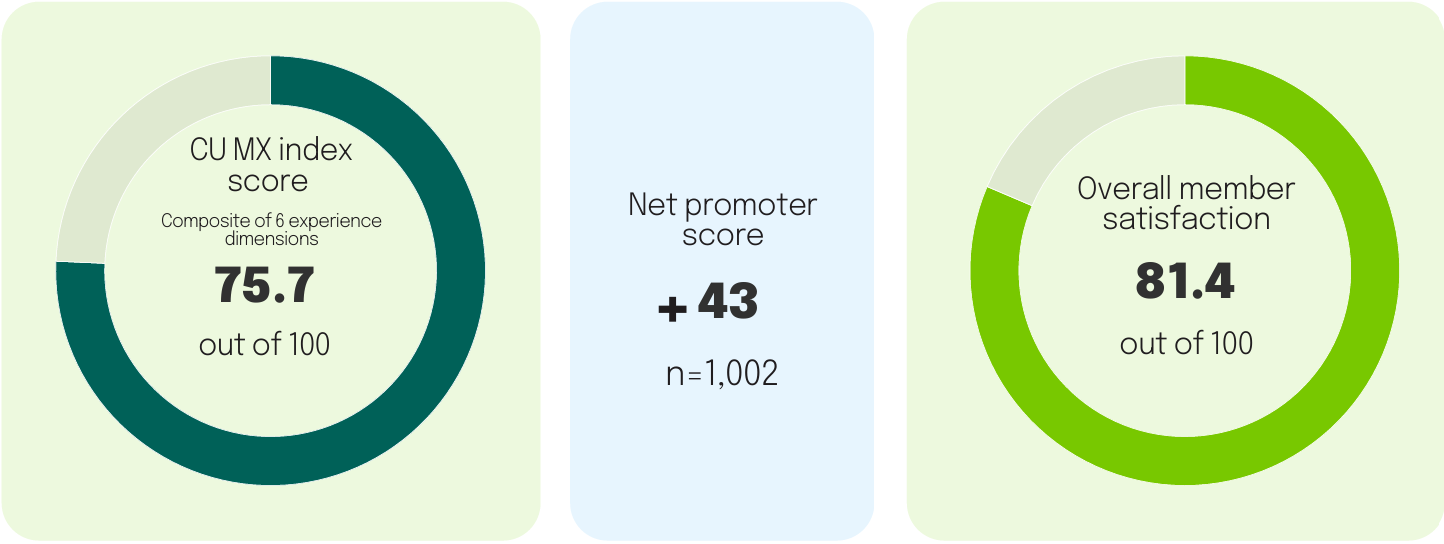
Let’s start with the good news! The overall CU MX Index Score is 75.7 out of 100. Overall satisfaction is even higher at 81.4, while the Net Promoter Score is a strong +43. Moreover, 57% of members are promoters, compared with just 14% who are detractors. And the scores are fairly consistent across the six dimensions measured. Member Support and Guidance comes in highest at 77.7, while Value and Financial Benefit is lowest at 73.9. That’s only a 3.8-point difference.
Service is a Strength. Guidance is the Opening.
Rapport clearly matters to credit union members, and they value the people they interact with. Member Support and Guidance is the highest-scoring dimension in the study, with staff service quality earning the strongest individual score at 79.5, and only 8% of members were dissatisfied with the people they dealt with. These numbers reinforce the value of the human relationship at a time when so much of banking is becoming increasingly digital.
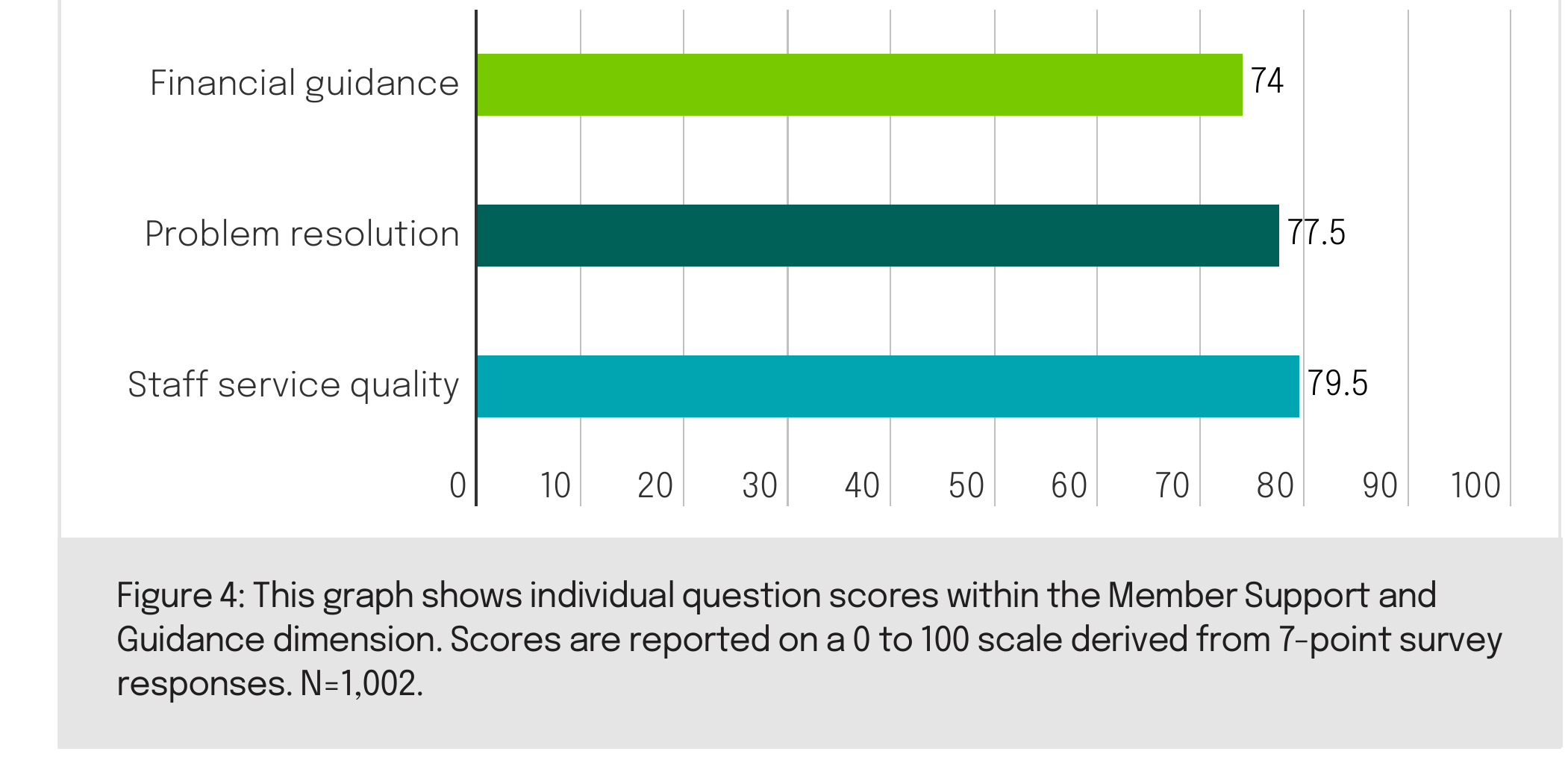
But there is a difference between simply answering a member’s question and proactively helping them make a better financial decision. And members too expect this, which is why financial guidance scores 74.0, making it the lowest-scoring question within the dimension and one of the five lowest in the study. And it translates to loyalty as well, because members who are very satisfied with the guidance they receive have an NPS of 83, compared with -21 among those who are very dissatisfied. That’s a 104-point swing.
Consider a member trying to decide whether to refinance a car loan. While one credit union might simply process the request, a proactive CU might look at the member’s current rate, run the numbers, and explain what refinancing could save them, while also pointing out if the savings aren’t worth the hassle. The second approach takes a little more effort, but it sends a very different message: we understand your situation, and we’re here to help you make the right decision. That is the kind of relationship some members say they are missing. One member in the 29-to-45 age group described expecting a more personalized, human experience from their community credit union but instead finding the relationship transactional. The member reached out looking for guidance and didn’t get it. And with 19% of members neutral about the financial guidance they receive, there is a sizable group that hasn’t necessarily had a bad experience but hasn’t yet seen enough to believe their credit union can help them get ahead either.
This is where the opportunity lies: moving from simply serving members when they ask for help to anticipating where they might need it next.
The Gen Z Story has been Misread
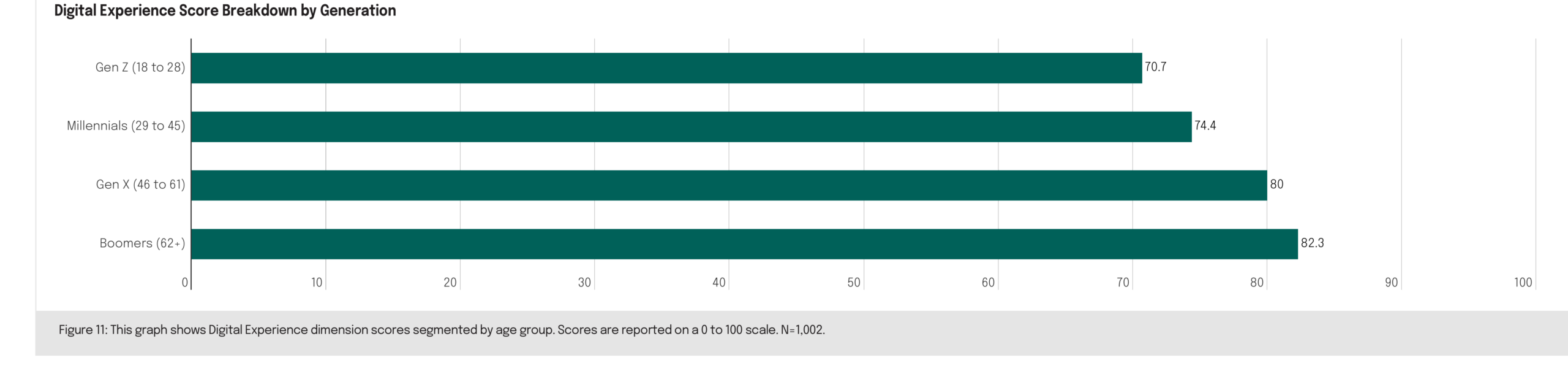
For years, the assumption has been that younger members are harder to retain because credit unions cannot match the digital experience offered by fintechs and large banks. But our Sogolytics Index data tells a different story. If technology were the main issue, digital experience should show the biggest gap between generations. Instead, it is one of the smallest: Gen Z scores digital experience at 70.7, compared with 82.3 among Boomers, an 11.6-point difference. Trust shows a much wider 15.2-point gap, while communication follows closely at 13.2 points.
The bigger concern is what younger members think about the relationship itself. Gen Z gives their credit union just 63.1 on whether it is genuinely acting in their financial interest, the lowest score any generation gives to any question in the entire survey.
That suggests younger members aren’t simply saying, “Your app isn’t good enough.” They are asking a more fundamental question: “Are you really on my side?”
There is a certain irony in that. The generation most often associated with digital-first experiences is also asking for something that has very little to do with technology: to feel understood and cared for.
And acting in a member’s interest doesn’t necessarily require a major financial planning exercise. It could be as simple as noticing that someone is paying for an account they don’t need, pointing out a better savings option, or analyzing payments going for tuitions, and proposing a student loan at a discounted rate. These may seem like small moments, but over time they shape something much bigger: whether a member believes their credit union is simply serving them or genuinely looking out for them.
Trust Compounds, and it Starts Slow
The trust data becomes even more revealing when we look at how long members have been with their credit union. Members with more than ten years of tenure score trust at 80.5, compared with just 66.9 among those in their first year. There is a similar pattern in how members use their credit union: those who rely on it as their only financial institution score trust at 77.3, compared with 70.5 among members who keep a bank as their primary institution.
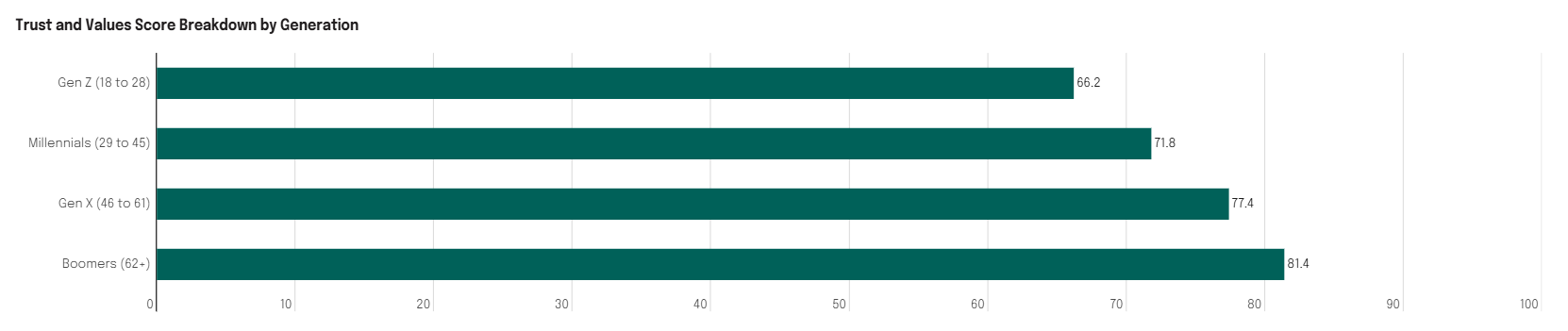
Taken together, the numbers suggest that trust strengthens as the relationship deepens, but the early stages matter because that is where first impressions are built and the relationship begins to take shape. Picture a new member who feels overlooked in their first few months; they may not leave immediately, but they may never develop the level of trust that turns a new account into a lasting relationship.
That makes the first 90 days more than an onboarding exercise. It is the period when a credit union has an opportunity to show members what kind of relationship they can expect going forward: will this simply be a place where I keep my money, or an institution that truly understands my financial needs and looks out for me?
Communication is Happening. Relevance is Not.
Credit unions are doing a good job of keeping members informed, and that’s also reflected in the Credit Union Member Experience Index and Benchmarks 2026 Report. 80% of members are satisfied with the clarity of the information they receive about accounts, rates, and changes. But that satisfaction drops to 74.7 when the question shifts from simply being informed to receiving information about products and services that fit their financial needs. 17% remain neutral, suggesting there is a sizeable group that has yet to see much relevance in the communication they receive.
So an email about a product that has little connection to a member’s financial situation does not become relevant simply because it includes their name. And over time, these irrelevant emails and messages can force members to tune out altogether.
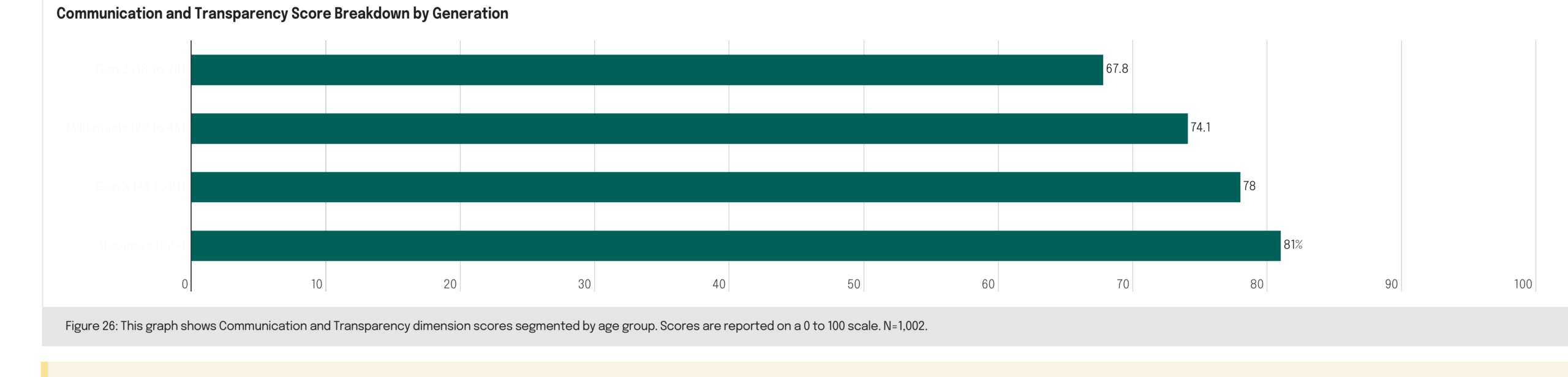
Moreover, the data is even more telling among younger members. Gen Z scores communication at 67.8, compared with 81.0 among Boomers, and gives just 68.2 for whether product communication is relevant to their needs.
The issue, then, isn’t whether credit unions are communicating enough. It’s whether they are using what they know about their members to make those conversations more relevant. That is where communication can move from simply keeping members informed to actually helping them.
Value is Real. It Just isn’t Landing Evenly.
Value and Financial Benefit is the lowest-scoring dimension overall, at 73.9, which is worth paying attention to given that competitive rates and lower fees have traditionally been central to the credit union proposition. The data does not suggest that members fail to recognize that value altogether, however. Instead, it points to a gap between the benefits credit unions provide and how consistently those benefits are felt by members.
Fees are a good example, with 73% of members saying that they’re satisfied with their credit union’s fees compared with what they would expect from a bank, and 29% are very satisfied. Rates, however, are less clear-cut, with 16% of members remaining neutral, suggesting that a section of members surveyed are not convinced the financial advantage is showing up in their everyday experience.
That gap is even more pronounced among younger members. Gen Z, for instance, scores financial value at 67.3, compared with 79.0 among Boomers, and gives just 66.0 on fees compared with banks. This suggests the issue may not be pricing alone, but whether credit unions are doing enough to demonstrate the value they offer in ways that feel relevant to different generations.
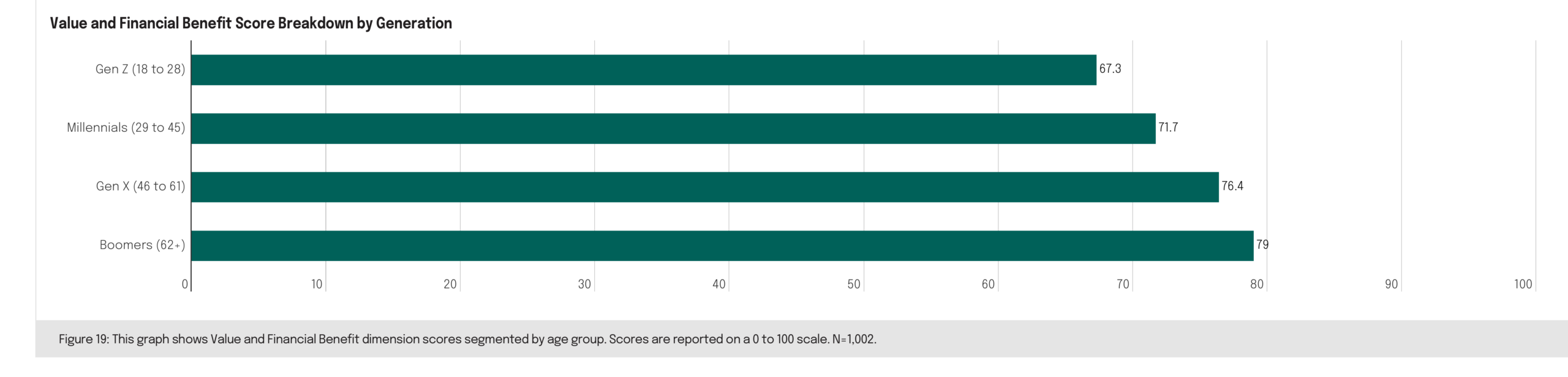
After all, a strong value proposition only works if members can see it in their own financial lives. Better rates and lower fees may be part of the credit union model, but unless those benefits are clear and meaningful to members, they are unlikely to influence how people feel about the relationship over time.
Conclusion: The CX Pivot
What stands out from these findings is that the biggest opportunity for credit unions isn’t technology. It’s the relationship they have with their members. One that is built on trust and the belief that the institution is there to help its members. The challenge is making that relationship clear and meaningful, especially to younger members who could become the next generation of long-term members.
That also changes what the CX mandate needs to look like for Credit Unions. The focus should be less on adding another feature or sending another survey and more on understanding where the relationship is working, where it is falling short, and what the organization can do about it. That means looking closely at the first 90 days of membership, making communication more relevant to a member’s actual financial situation, following through when members provide feedback, and recognizing the early signs that trust may be starting to slip.
It also means looking beyond the overall CX score. A healthy NPS can sit alongside younger members questioning whether their credit union is acting in their interest. Strong staff service can coexist with members who feel they are not getting enough financial guidance, while regular communication can still miss the mark if the information being shared does not feel relevant.
The real pivot is from simply providing financial services to making the relationship genuinely useful: guiding members when they need help, making communication relevant, acting on what they tell you, and paying attention to the signals they never think to give you.
That is how a credit union stays meaningfully different when everyone else is trying to make banking feel the same.