


About the Study
Sogolytics surveyed 1,003 U.S. adults to examine what benefits or attributes will encourage travel and dining customers to spend more as affordability becomes a rising concern for many consumers. The study covered price sensitivity across airlines, hotels, and restaurants, what makes a higher price worth paying, the fees that would cause a customer to switch to a competitor, and how customers raise concerns after a poor experience. Industry-specific questions were only shown to respondents who had paid for that category in the past 12 months: flights (n=307), lodging (n=554), and a sit-down restaurant meal (n=765).


Background
Travel and dining have gotten more expensive, yet customers have not stopped buying. Airline fares rose roughly 26% over the past 12 months while restaurant and dining costs rose 3.4%, yet The Conference Board (2026) found consumers planning to increase service spending over the next six months. Customers adjust rather than cancel, driving instead of flying, choosing cheaper lodging, and spending less once they arrive. For example, when U.S. hotel prices rose in 2024, guests took nine trips on average rather than ten while staying longer at each (J.D. Power, 2024).
That leaves business leaders with the question: what is worth charging a premium for, and what has become an expectation?
What the Data Shows
-
Price concern splits the market almost evenly
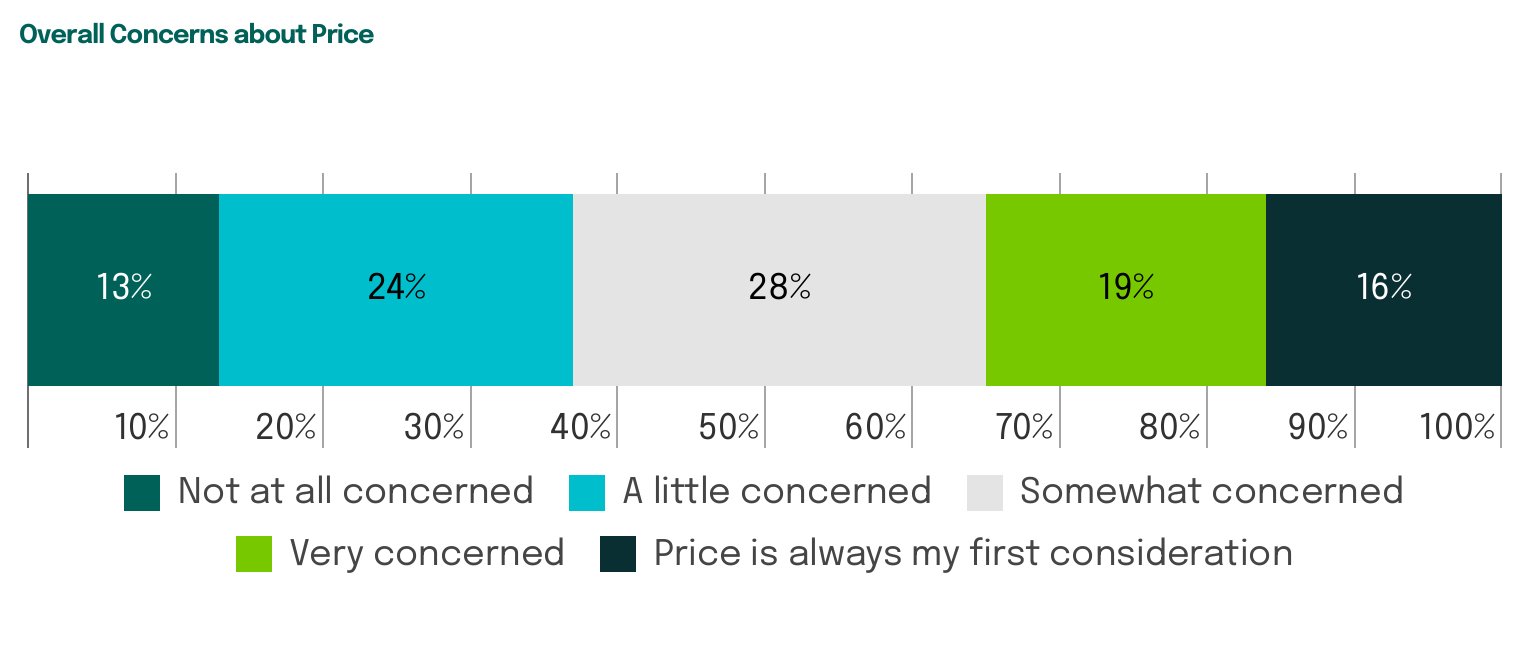
When asked how concerned respondents are about price when making dining or travel decisions, 35% said they are very concerned or that price is always their first consideration. Another 37% said they are not at all or only a little concerned.
-
Most customers will not pay a premium
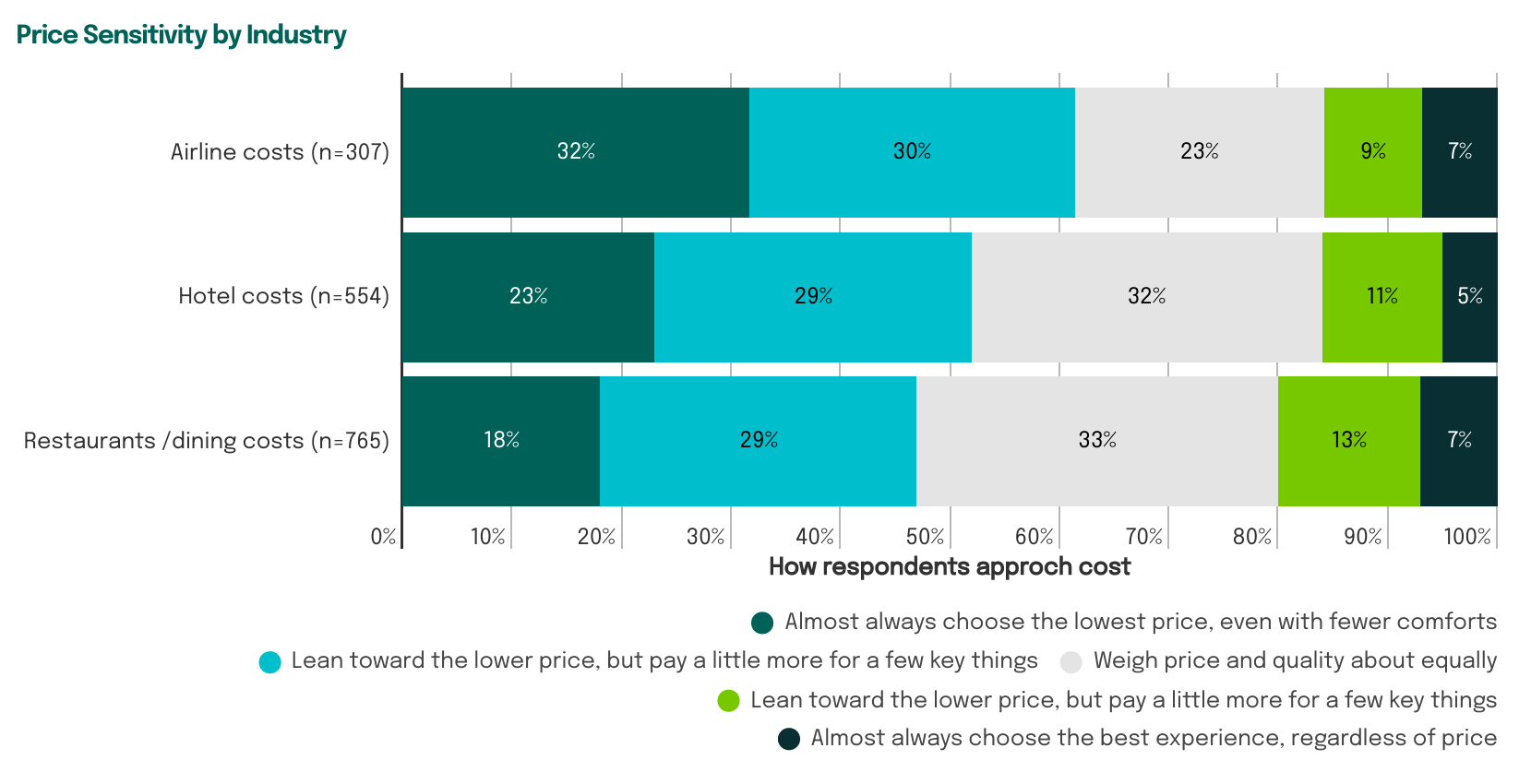
Asked how they approach costs by industry, 62% lean toward or always choose the lowest price for flights and 52% do the same for hotels. Across all three industries, 20% or fewer said they would pay a higher price for a better experience. Airfare is the most price-sensitive category, with 32% always choosing the lowest price.
-
Business travelers describe themselves as less price-conscious, then buy otherwise
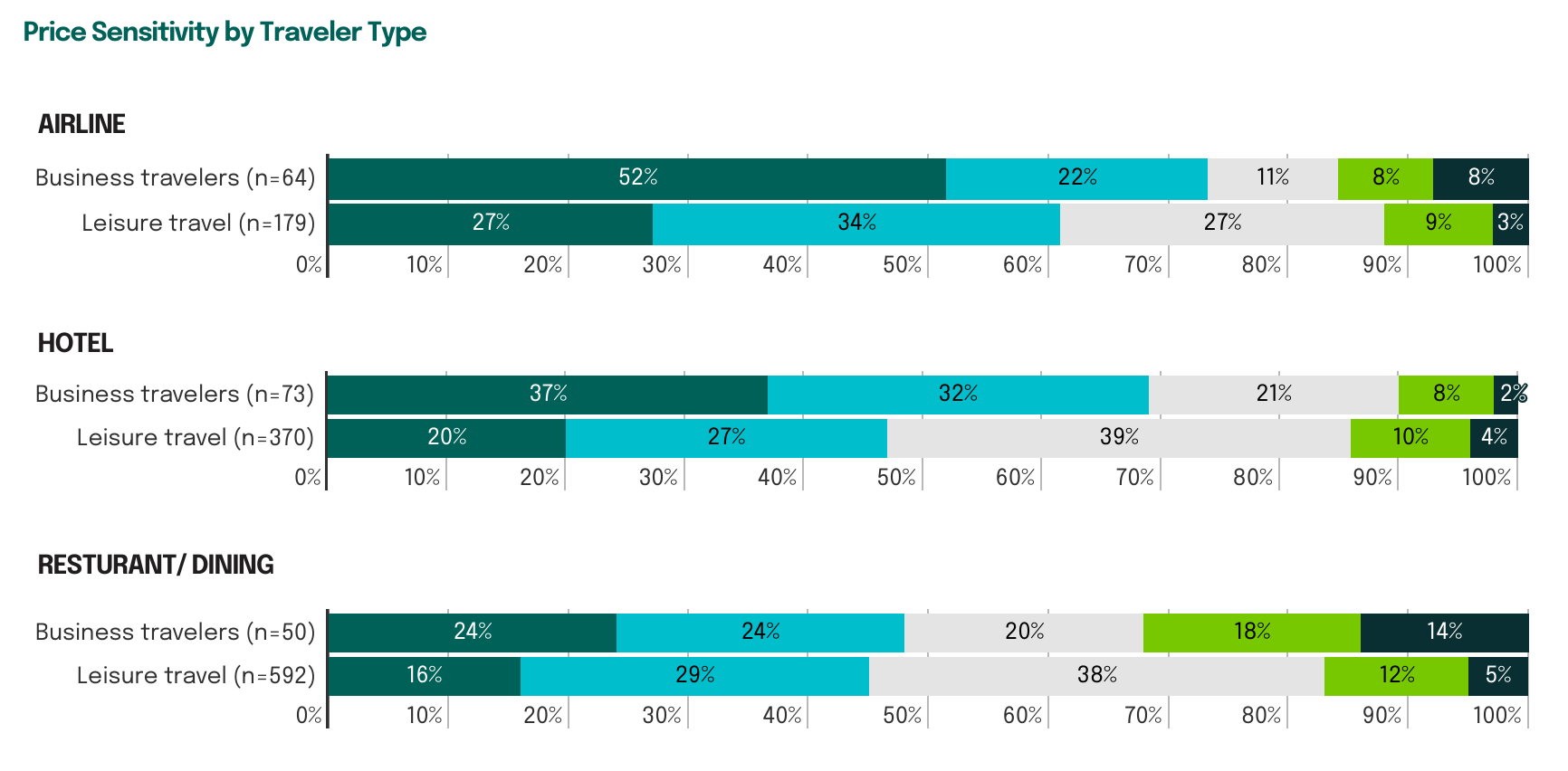
Asked about general price concern, 48% of business travelers said they were not at all or only a little concerned, compared with 35% of leisure travelers. When asked what they actually purchase, business travelers chose the lower price more often than leisure travelers for flights (74% vs. 61%), hotels (69% vs. 47%), and dining (48% vs. 45%).
-
Customer service is the one premium driver that carries across industries
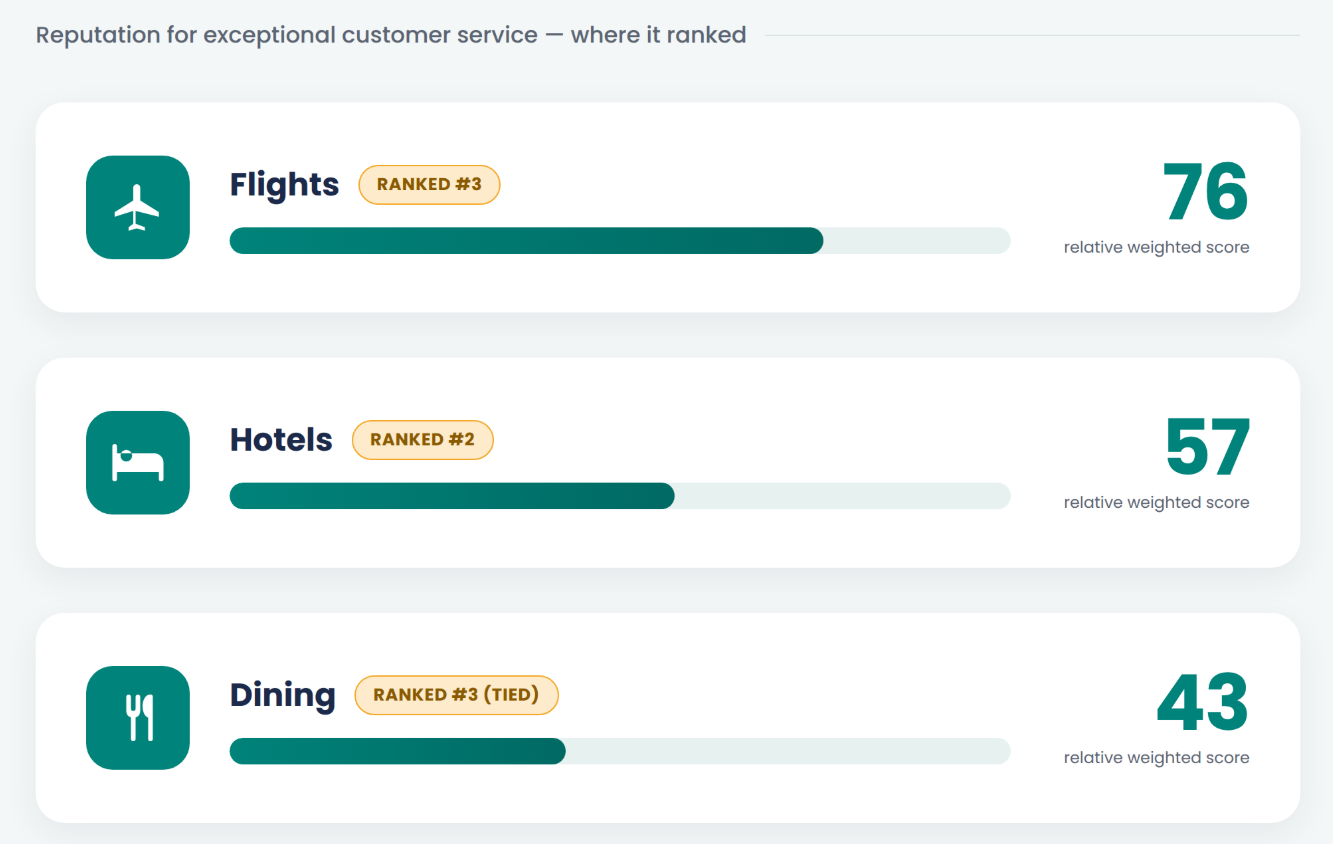
When asked what would make a price 15% higher worth paying, respondents ranked a free meal on board first for flights, a convenient location first for hotels, and a complimentary item first for dining. A reputation for exceptional customer service placed in the top three in all three industries, second among hotel guests and third among flyers and diners.
-
Several amenities are now baseline, and charging for them may drive customers to a competitor
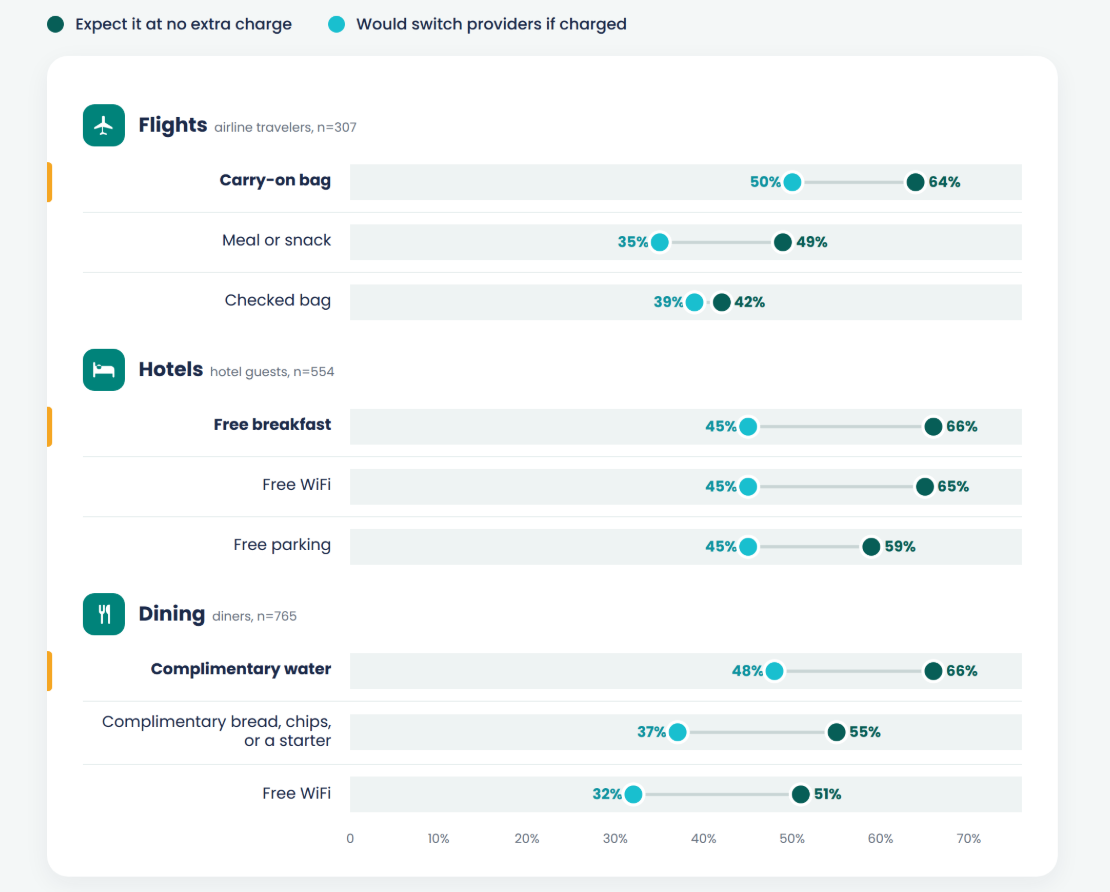
When asked what they expect at no extra charge, 64% of air travelers named a carry-on bag, 66% of hotel guests named breakfast, 65% named WiFi, and 66% of diners named complimentary water. Charging for those items moves people: 50% would book a different airline over a carry-on baggage fee, 45% of guests would consider another hotel over a breakfast, WiFi, or parking charge, and 48% of diners would leave over a charge for water.
-
One in five posts publicly before saying anything to the business
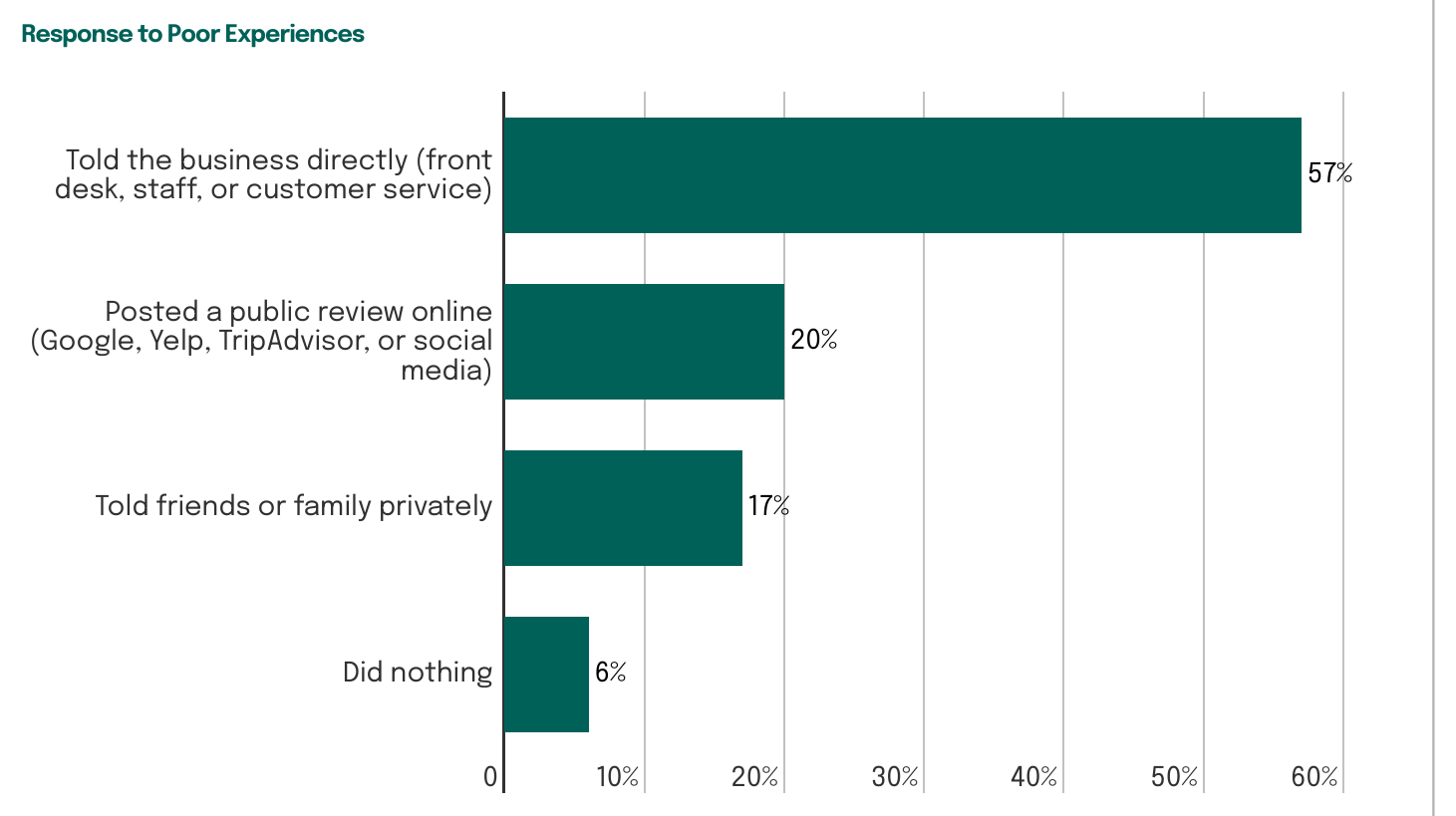
Asked what they did first after a poor experience with an airline, hotel, or restaurant, 57% told the business directly, 20% posted a public review online, 17% told family or friends privately, and 6% did nothing.
-
Some customers never give the business a chance to respond
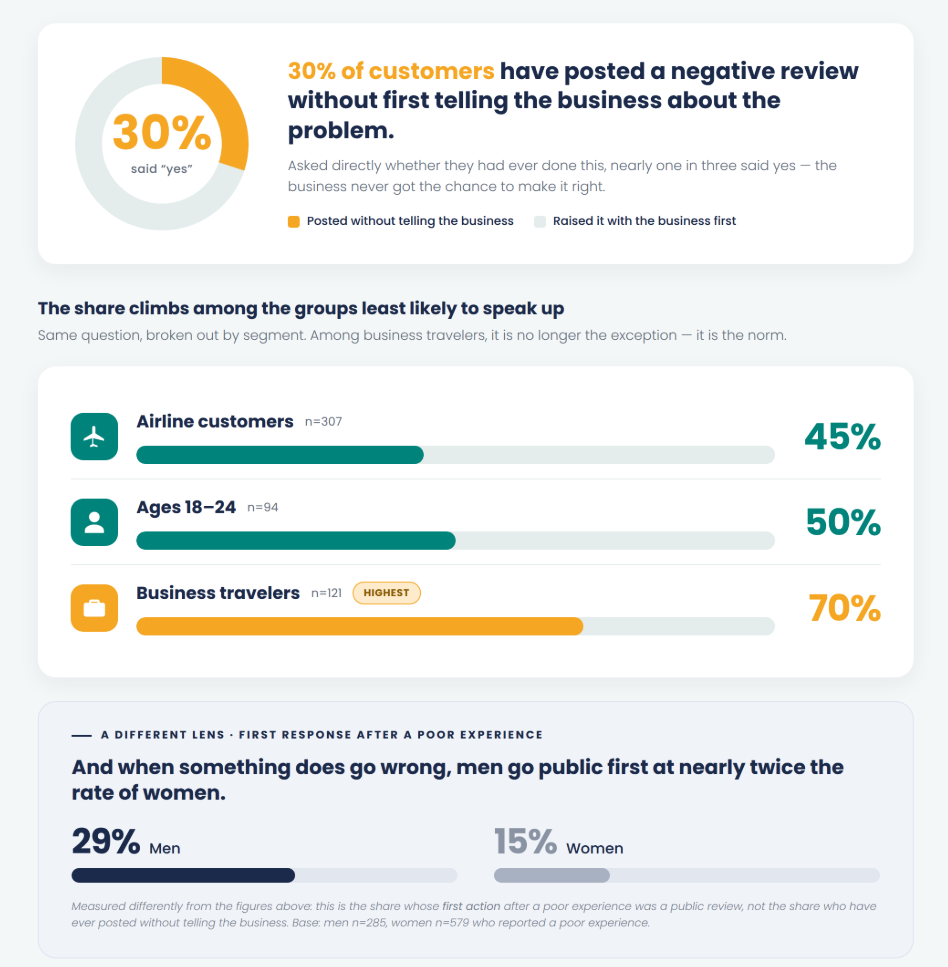
Asked whether they had ever posted a negative review without first telling the business about the problem, 30% said yes. That share reaches 45% among airline customers, 50% among 18 to 24 year olds, and 70% among business travelers. Men posted a public review first at nearly twice the rate of women (29% vs. 15%).
Conclusion and Next Steps
Results from this report reveal that customers shop on affordability, and few will trade up on price alone. What justifies a higher price is a reputation for strong customer service. Business leaders may consider the following:
-
Collect feedback rather than wait for it
More than a third of customers with a poor experience never bring it to the business, and the groups least likely to speak up, including business travelers, men, younger customers, and airline customers, are the ones most likely to post publicly. Providing opportunities to ask for customer feedback at the point of service and again afterward gives the business a chance to fix the problem before the customer decides not to return or post publicly online.
-
Be transparent about pricing
Customers named carry-on bags, breakfast, WiFi, parking, and water as expected rather than optional. Where a charge cannot be avoided, disclose it early in the purchase process rather than at checkout.
Across airlines, hotels, and restaurants, most customers won’t pay a premium at all: 20% or fewer said they’d pay more for a better experience in any single industry. The one driver that carries across all three is a reputation for exceptional customer service, which ranked in the top three everywhere, second among hotel guests and third among flyers and diners.
They describe themselves that way but don’t buy it that way. 48% of business travelers called themselves not at all or only a little concerned about price, versus 35% of leisure travelers, yet they chose the lower price more often for flights (74% vs. 61%), hotels (69% vs. 47%), and dining (48% vs. 45%).
64% of air travelers named a carry-on bag as a no-charge expectation, while 66% of hotel guests named breakfast and 65% named WiFi. Among diners, 66% expected complimentary water.
Charging for a baseline amenity moves people: 50% would book a different airline over a carry-on baggage fee, 45% of guests would consider another hotel over a breakfast, WiFi, or parking charge, and 48% of diners would leave over a charge for water.
30% said they had posted a negative review without ever raising the problem with the business. That share rises to 45% among airline customers, 50% among 18-to-24-year-olds, and 70% among business travelers.
57% told the business directly, 20% posted a public review online, 17% told family or friends privately, and 6% did nothing. That means more than four in ten never brought the problem to the business first.