




During school surveys or feedback opportunities, school and district leaders often come across the same participation concerns year after year: family survey response rates are low, board meeting turnout is in the single digits, and parent town hall meetings have more staff in the room than families. From this, leaders confront the same barriers: this is not representative of our community, engagement is failing, outreach is not landing, the community has tuned out, and this data is not accurate.
New national data suggests that perception and dismissing that data may negatively impact family retention.
A Sogolytics survey of 534 U.S. families with a child in K-12 schools found that 100% of families that had already decided to leave their current school had provided input to that school in the previous twelve months. This input was provided through speaking with a staff member, surveys, town hall meetings, emails, and more. Among families with no intent to leave, 79% provided input. Departing families engaged at higher rates than committed ones.
They were also more likely to say the school had not acted on their input. 19% of committed families disagreed that their school had acted on family input. Among families who had applied to an alternative or already decided to leave, that share rose to 28%.
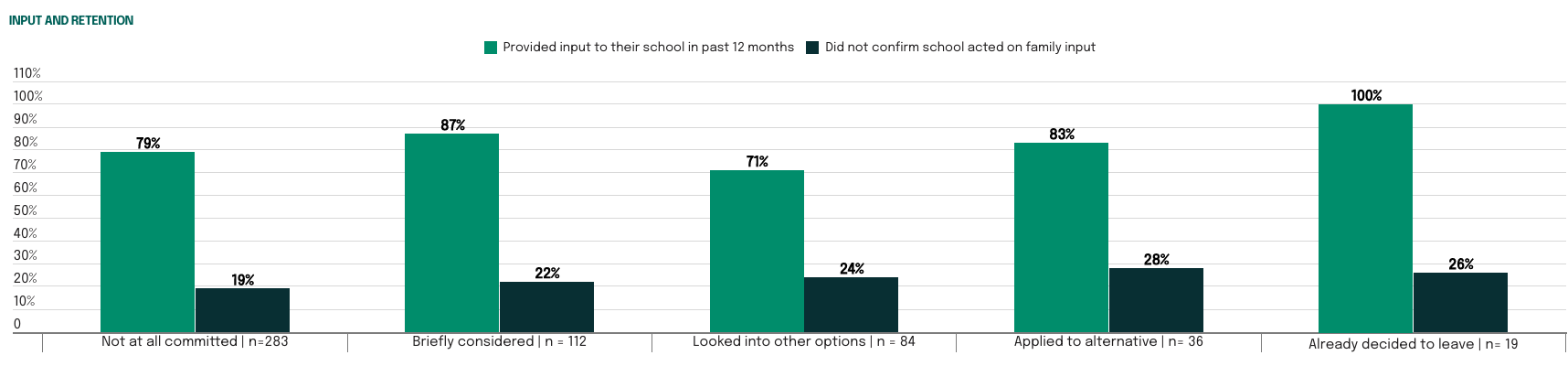
Setting those two findings against standard perceptions of participation should make us question the assumptions we make about low feedback rates. It can mean the families most at risk of leaving are trying to be heard before they go. Moreover, a low response rate does not automatically mean your community is disengaged. It can mean the committed families feel content enough to skip the survey during this cycle.


Communication to Strengthen Feedback Opportunities
Districts have good reasons to track family participation in feedback opportunities; it is important for grant applications and is often used as a metric for strategic planning. Although it is equally important for family engagement to ensure families know their input is valued and that districts are following up and communicating what is being done with that data.
What Districts Should Also be Tracking
Participation numbers alone will not tell you what is happening.
First, who is participating? Disaggregate input by school, grade, and demographic subgroups. For example, this study revealed English learner families were the group most likely to be looking for alternative schools. If the district only looks at total participation numbers, leadership will never see that insight and know to effectively act on that data.
Second, is the district responding? The finding that departing families were more likely to say their school had not acted on their input points to a specific measurement: whether families see the loop close.
Strong communication practices are an integral part of family retention and the feedback cycle. When asked what matters most in evaluating school fit, 88% of families rated strong communication with families as important or very important. Moreover, responsiveness to family input and concerns was rated important or very important by 87%.
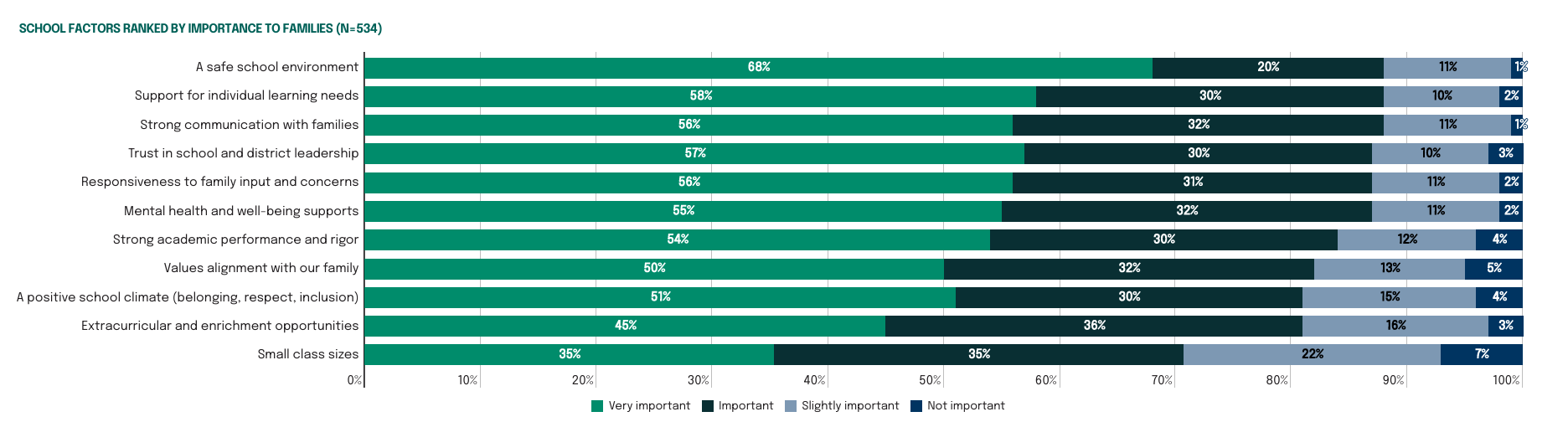
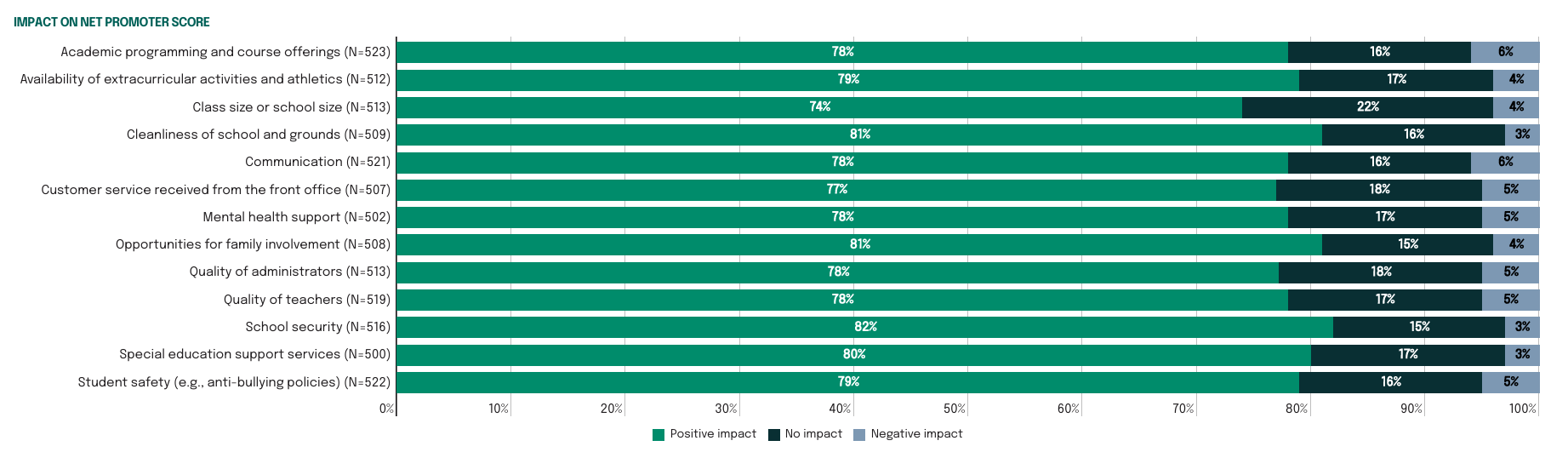
That importance shows up again in what drives whether families recommend their school. Communication had a positive impact on 78% of families’ recommendation ratings. Opportunities for family involvement had a positive impact on 81%, among the strongest drivers of the school’s Net Promoter Score. Communication and input opportunities are core to what families value and find important in their child’s school.
Collecting input and community feedback without acting on it is worse than not collecting feedback at all. Ensuring the feedback loop is closed, and that respondents understand how their data is leading to change shows that their input is valued, is how districts can increase engagement.
A Survey with Low Participation isn’t a Failed One
For superintendents and school boards heading into the fall, the takeaway is this. Stop assessing engagement and the utility of the feedback collected by participation rate alone. Start assessing it by loop closure. A school that receives 100 pieces of family input and acts visibly on one of them is in stronger retention shape than one that receives five hundred and acts visibly on none. The families who are providing input want their voices to be heard. A low participation number does not mean failure; buy ignoring the participation you already have is.
Not necessarily. Our Sogolytics’ survey found that among families with no intent to leave, 79% still provided input in the past twelve months. A low response rate can mean committed families felt content enough to skip a cycle, not that the community has tuned out.
In the same study, 100% of families that had already decided to leave their school had provided input in the previous twelve months, a higher engagement rate than committed families. Families most at risk of leaving are often trying to be heard before they walk away.
Two things. First, who is participating, disaggregated by school, grade, and demographic subgroup, since the study found English learner families were the group most likely to be seeking alternatives. Second, whether the district is responding, measured by whether families can see the feedback loop close.
Families who had applied to an alternative or decided to leave were more likely to say their school had not acted on their input (28%, versus 19% of committed families). Acting visibly on feedback and communicating what changed is central to whether families stay.
Strong communication with families was rated important or very important by 88% of families, and responsiveness to family input and concerns by 87%. Communication had a positive impact on 78% of families’ recommendation ratings, and family involvement opportunities on 81%.
No. A district that receives 100 pieces of family input and acts visibly on one is in stronger retention shape than one that collects 500 and acts on none. The measure that matters for engagement is loop closure, not raw participation count.