





If you asked your employees today whether they’re satisfied with their job, most would probably say yes. But ask what it would actually take for them to walk, and you might not love the answer. That gap between what people report and what’s really going on underneath shows up again and again in this quarter’s data. The findings below are drawn from The Sogolytics Experience Index, Employee Edition, 2Q 2026, our quarterly read on what employees are really telling their employers.

Retention Numbers Look Great. They’re not Telling the Whole Story.
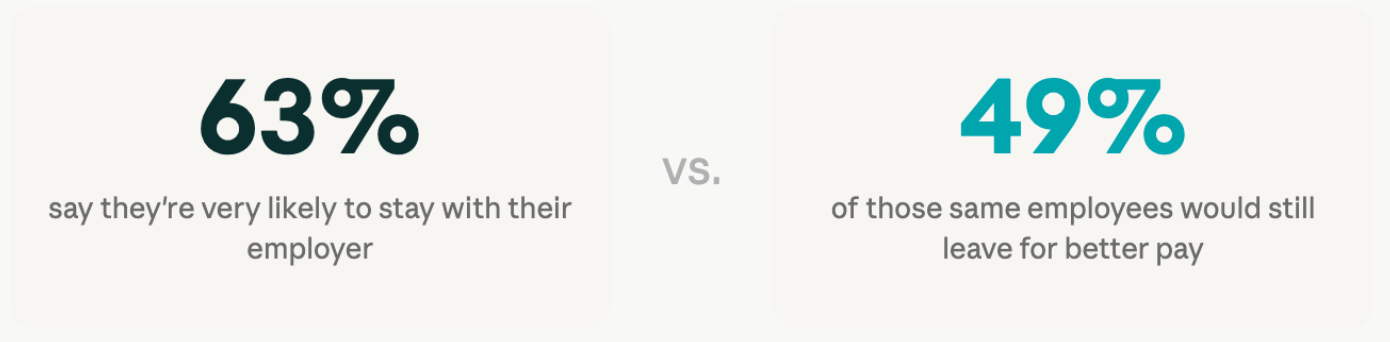
Start with the headline number and there’s plenty to feel good about. 63% of employees say they’re very likely to stay with their employer over the next year, the highest we’ve seen in three cycles. That’s the kind of stat that makes a retention slide look good in a board meeting. But dig one question deeper, ask those same employees what would change their mind, and nearly half say better pay elsewhere would do it. Intent to stay and immunity to poaching aren’t the same thing. Your retention numbers might be holding steady simply because nothing better has come along yet, not because the relationship is secured.
AI Opinions Are Hardening and not Settling
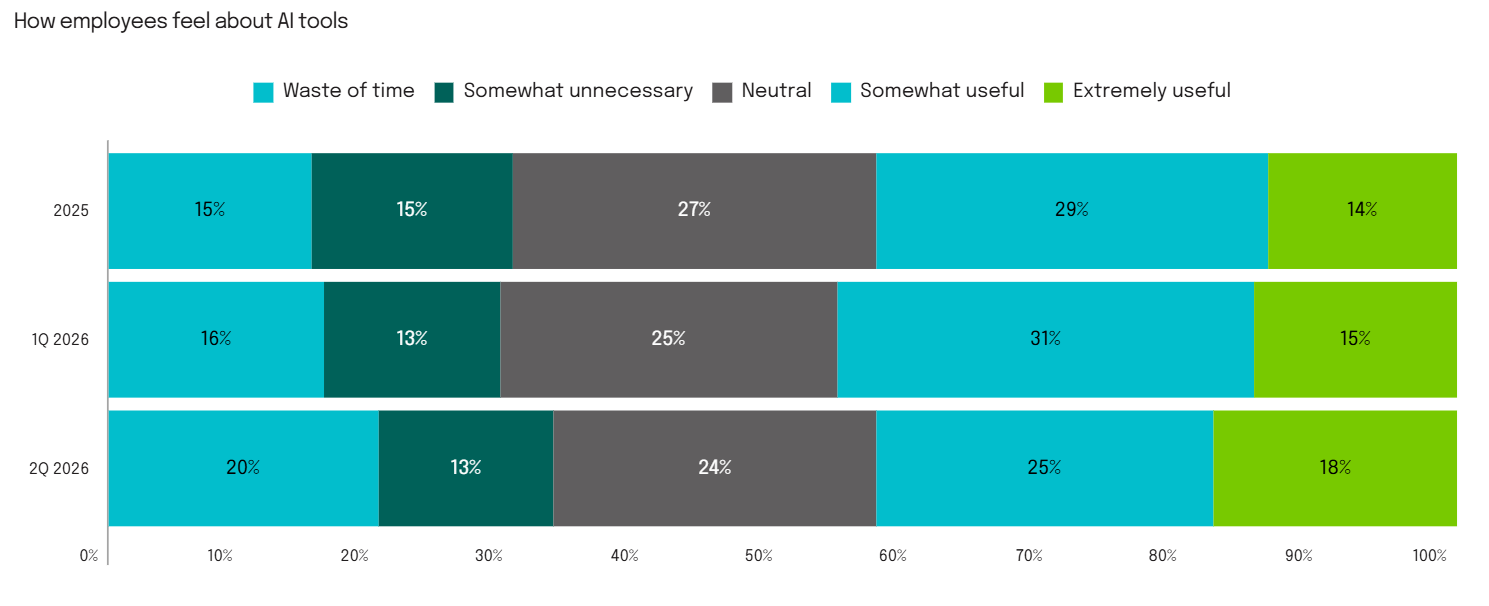
Here’s one that might surprise you: employees aren’t warming up to AI, they’re picking sides. A year ago, 15% called it a waste of time, and 14% called it extremely useful. Both of those numbers have grown since then, to 20% and 18%. Meanwhile, the reasonable middle, the people who called it “somewhat useful” or just shrugged and said “neutral,” shrank by nearly 9 points. Almost one in four employees now say AI shouldn’t be used at work at all. That’s not a rounding error; it’s a real, growing group that most AI rollout plans never account for.
The Office is Back, at Least for Now
Think your employees are dying to work from home? You might want to check that assumption. When we asked what kind of work arrangement people actually want, fully in-office won, by more than double any other single option. 57% said 4 or 5 days in the office is their ideal. That runs against a lot of what’s been baked into hybrid work policy over the last few years, and it’s worth asking whether your flexibility program is still solving the problem your employees actually have.
Anonymity Matters More than Employers are Delivering on it
Here’s a stat worth sitting with: 59% of employees say knowing a survey is anonymous makes them more likely to answer honestly. Only 21% are very confident that anonymity is actually honored when you promise it. That gap, between what motivates honesty and what employees really believe, sits right at the center of every feedback program that isn’t getting the response rates it should.
What this Adds Up To
Pull back far enough, and none of this is really about AI, the office, or your surveys specifically. It’s the same shift showing up in three different places: your employees aren’t taking good intentions on faith anymore. A promise has to actually hold up when it’s tested. Telling people feedback is anonymous doesn’t help much if they don’t believe you. Calling a policy flexible doesn’t matter if most of your team never wanted that flexibility in the first place. And a strong retention number won’t tell you much once you ask what it would actually take to lose that person.
The organizations that pull ahead this year won’t be the ones with the best policies on paper. They’ll be the ones willing to check those policies against what employees are really saying, every quarter, not just once a year. The data’s already telling you where the gaps are. The only question left is whether you’re willing to look.