


This is the third in a series of three articles on the Limited English Proficiency for families in K12. Click here if you want to read the first to learn why Limited English Proficiency is essential to K-12 schools.
Inclusive survey practices are most powerful when families can see how their feedback leads to real change. Across the country, districts are using intentional multilingual engagement strategies not only to increase participation, but to strengthen trust, improve programs, and support student success.
The following recommendations and case studies illustrate what inclusive data collection looks like in practice, and how elevating the voices of LEP students and families can drive meaningful, equity-focused improvement.
Recommendations: How Districts, Schools, and Classrooms Can Improve Participation
Research shows that increasing participation among multilingual and LEP families requires a coordinated, district-wide strategy sustained over time and not just a few quick fixes or one-time changes.
District-level recommendations
District leaders can make the biggest impact by building multilingual engagement into strategic planning. This includes:
- Allocating sustainable funding for professional translations
- Hiring multilingual community liaisons
- Creating clear success measures, such as survey participation goals broken down by home language, to ensure accountability
School-level recommendations
School leaders can increase participation by making communication more culturally and linguistically accessible. This includes:
- Training staff on engaging LEP communities
- Ensuring survey distribution is clear, consistent, and welcoming
- Using formats that respect families’ time, literacy levels, and communication preferences
Classroom-level recommendations
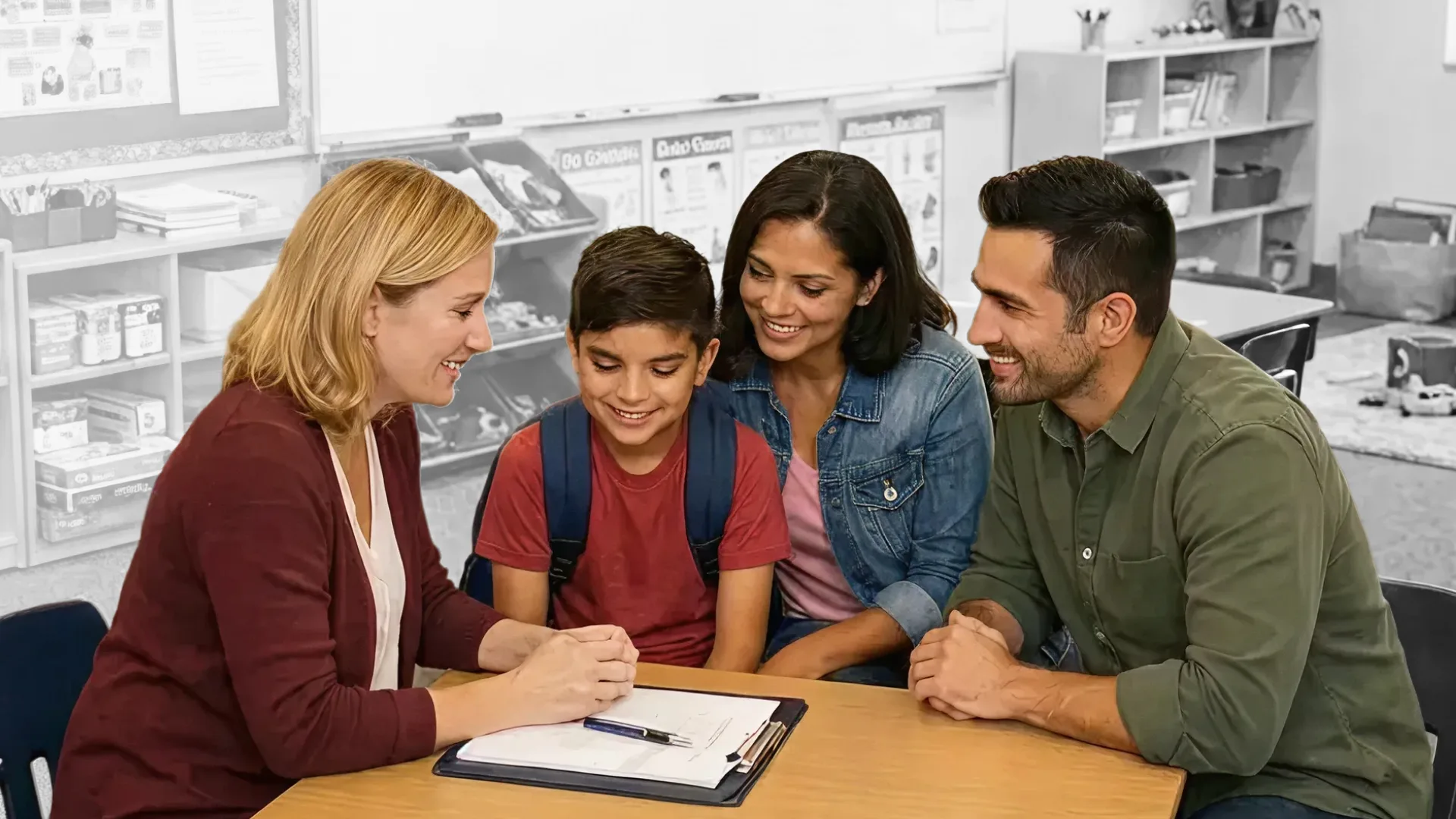
Teachers and support staff play a powerful role in helping families feel invited and valued. Research and practice show that personal invitations are one of the most effective ways to increase participation, especially when communication is in the family’s home language.
Teachers can also use existing touchpoints to support survey engagement, such as:
- Class newsletters
- Conferences
- Family nights
- Providing in-person help so families can complete surveys with support
Meaningful participation from multilingual and LEP families is a priority for both equity practices and data quality. When families see their feedback lead to real change, trust increases, participation grows, and schools move closer to true, community-centered engagement.
Policy and Practice in Action: Sogolytics Case Studies
To bring these recommendations to life, we want to share how several of our district partners have successfully put these practices into action. It’s important to recognize that every district community is different, so what works in one place may look different in another. The most effective approach is the one that aligns with your district’s goals, priorities, and the needs of your population.
New York School District Improves Family Engagement and Equitable Resourcing
In the 2023 and 2024 school years, a school district in New York launched a focused effort with two clear goals:
- Improve educational outcomes for LEP students by using data to guide decisions and strengthen culturally responsive supports.
- Increase satisfaction and trust among LEP families by expanding access to engagement opportunities, improving communication, and strengthening satisfaction with students’ academic experiences.
Because equitable engagement is a key part of improving outcomes for multilingual learners, district leaders partnered with Sogolytics to build a comprehensive plan to collect data, analyze it thoughtfully, and take action based on LEP student and family voices.
Key Practices Implemented
1) Using Benchmarked DTSDE Surveys to identify experience gaps
The district administered Sogolytics’ Benchmarked DTSDE Survey to gather school climate and engagement feedback from students, families, and staff. To better understand equity gaps, results were disaggregated by English Learner (EL) status, allowing leaders to compare the experiences of EL respondents with general education peers. This reflects research showing that disaggregated data is essential for uncovering equity gaps and supporting continuous improvement (U.S. Department of Education, 2022; American Institutes for Research, 2023).
2) Targeted multilingual outreach through email and text
To increase participation, the district used separate bilingual outreach campaigns in English and Spanish, delivered through email and text messaging. Using Sogolytics’ propriety survey platform, families who had identified Spanish as their home language were sent parallel messages to those in English designed specifically for their language preference. This mirrors best practices showing that language-accessible communication and personalized outreach increase multilingual engagement and help build trust (MidTESOL, 2021).
3) Transparent reporting through bilingual infographics
After the survey closed, district leaders focused on transparency by sharing results through infographics in both English and Spanish. These easy-to-read materials were distributed to schools, posted on district websites, and shared through district social media channels. This aligns with recommendations showing that returning survey data to families, especially in visual and accessible formats, builds trust and encourages future participation (Education Week, 2022 & AIR, 2023).
4) Setting clear ELL improvement goals
To ensure feedback led to real change, the district created specific, measurable goals tied directly to engagement and satisfaction of EL students and their families. By embedding these goals into the district’s continuous improvement process, the district strengthened accountability and turned survey participation into a sustained engagement strategy rather than just a one-time initiative.
Impact
During the District’s 2023 survey administration, school leaders used student feedback to identify two priority areas for improving the academic outcomes of EL students and strengthening trust with LEP families: equitable access to resources at the elementary level and family engagement at the secondary level.
Survey results revealed inequities in access to learning tools and materials among elementary students. In 2023, 66% of EL students reported having access to a computer to complete schoolwork, compared to 92% of non-EL students. Similarly, 66% of EL students said they had the supplies they needed for school, while 84% of non-EL students reported the same. In response, the District focused on improving access to resources and academic materials for EL students during the 2024 school year. These efforts led to notable gains in the 2024 survey: 95% of EL students reported having access to a computer for schoolwork, and 74% said they had the supplies they needed.
At the secondary level, survey data highlighted gaps in family engagement. In 2023, 45% of EL students said their families attended school events, compared to 69% of non-EL students. To address this, school leaders introduced more inclusive communication practices, including translated materials and targeted outreach to LEP families. By the 2024 survey, 73% of EL students agreed that their family attends school-sponsored events, an encouraging increase that reflects progress toward stronger school-family partnerships.
California School District Explores Perceptions of Academic Experiences among LEP Students and Families
In 2025, a school district in California partnered with Sogolytics to strengthen educational equity. To support that goal, district leaders and Sogolytics administered a custom-designed survey to gather the perceptions of families whose student(s) participates in their English Learner Program. The survey focused on overall program satisfaction; academic clarity; transparency for grades, testing, and program criteria; and family-school communication. This initiative reflected the district’s commitment to ensuring families of LEP students are not only participants, but true partners in the educational process.
Key Practices Implemented
1) Using a customized survey for English Learner families
Instead of using a school climate survey, the district administered a separate survey specifically for LEP families to ensure the questions were relevant to their experiences and priorities. This approach supports research suggesting that targeted, population-specific surveys can produce more actionable insights than general surveys when engaging multilingual communities (AIR, 2023).
2) Leveraging multiple communication channels to expand reach and build trust.
Because trust and accessibility are key drivers of survey participation, the district used a multi-channel communication strategy to meet families where they already engage. Surveys were shared not only using Sogolytics’ proprietary survey platform, but also through familiar district email system, text messages, school newsletters, and campus-based outreach to ensure broader visibility and easier access.
This aligns with research showing that consistent branding and repeated communication across trusted channels can significantly improve response rates among underrepresented groups (U.S. DOE, 2022; Pew Research Center, 2023). By combining intentional survey design with inclusive bilingual messaging across multiple platforms, the district elevated English Learner family voice and gained deeper insight into multilingual community needs.
Impact
The survey results strengthened understanding of English Learner (EL) programs, increased family satisfaction, and provided a clearer roadmap for continuous improvement grounded in authentic family feedback. Families shared strong appreciation for their school communities and the support provided to EL students. Most respondents (82%) said they feel satisfied or very satisfied with both the support their child receives and the support offered to families.
Families also reported high levels of student well-being and engagement. Nearly all respondents said their child experiences positive learning conditions at school: 94% reported their child feels joy at school, and 93% said their child has opportunities to be curious and explore new ideas. Celebrating these strengths with staff and families is essential, not only to recognize what’s going well, but also to build the trust and relationships that make it possible to take on bigger challenges together.
Additionally, results highlighted clear opportunities for improvement during the 2025–2026 school year, particularly around communication and transparency. Families expressed a desire for clearer information about key school processes, including: availability of supplemental supports, English curriculum and learning expectations, and reclassification protocols.
For example, 22% of respondents did not feel their school had communicated with them about available supplemental supports, and 17% strongly disagreed or strongly disagreed that the school had communicated what their child is learning in English. To improve these outcomes for next year, Sogolytics recommended schools focus on two-way, culturally responsive communication, to make sure families understand what English learning and support look like, what extra help (like tutoring, ELD, or after-school programs) is available, and how they can support their child’s progress at home. Specifically recommending interventions such as further translation of materials, family liaisons, regular communication cycles, and family learning nights as great ways to make these connections even stronger.
How Feedback Leads to LEP Action
Increasing multilingual and English Learner family participation in school surveys is more than a communication goal, it is a critical step toward building a district culture where every family is seen, heard, and valued. When districts invest in language access, trusted outreach, and sustained relationship-building, they don’t just improve response rates, they improve the quality and representativeness of the data that guides decisions.
Most importantly, when families can clearly see how their feedback leads to action, trust deepens and engagement becomes ongoing, creating stronger partnerships that support student success and a more inclusive school community.
Take the next step toward more inclusive, actionable feedback. Connect with us to learn how Sogolytics can support your research development, survey, and communication goals.