




35% of Patients Won’t Accept AI No Matter What You Offer Them
The pitch for AI in healthcare has never been more confident. Faster billing, smarter scheduling, fewer administrative headaches. The technology is ready, the business case is clear, and the pressure to modernize is real. There’s just one variable the industry keeps underestimating: patients.
New research from Sogolytics surveying over a thousand U.S. adults suggests that the gap between what healthcare organizations think patients want from AI, and what patients really want, is wider than most realize.


The Billing System is Already Burning Trust
Before AI even enters the conversation, there’s a pre-existing problem. A significant share of patients are walking into healthcare visits without any clear sense of what they’ll owe. And when cost clarity is missing going in, the chance of an unpleasant financial surprise on the way out jumps dramatically, from negligible to more than one in four.
That’s not a billing operations issue. That’s a trust erosion issue. And it’s the environment into which AI is now being introduced.
Payment outcome by pre-visit cost clarity
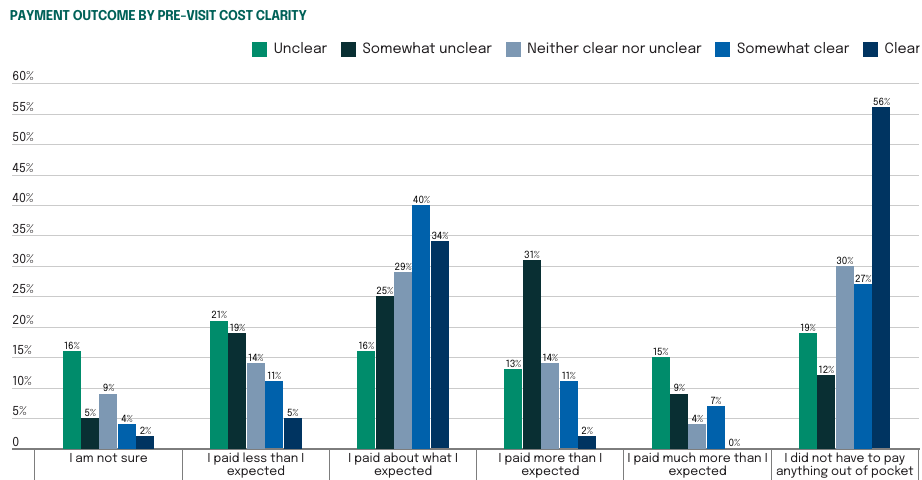
Source: Healthcare and AI Research by Sogolytics, 2026
Younger patients are absorbing the sharpest edge of this. Nearly two thirds of adults in their late twenties and early thirties hit at least one billing problem after their most recent visit. Among patients over 65, that figure is closer to one in seven. The system isn’t broken for everyone equally, and that uneven distribution matters when thinking about who AI needs to win over.
Patients are Open to AI, on their Own Terms
Here’s what the industry often gets wrong: patients aren’t resistant to AI. They’re selective about it. Scheduling, cost estimates, insurance verification, these are the areas where comfort is genuinely present and the appetite for automation exists. Move toward clinical judgment or reduce access to human support, and that comfort evaporates quickly.
The Sogolytics data shows a 15-point drop in patient comfort between administrative AI tasks and clinical ones. That’s not a small difference. It’s a clear signal about sequencing, where to start, and where to slow down.
AI comfort by task
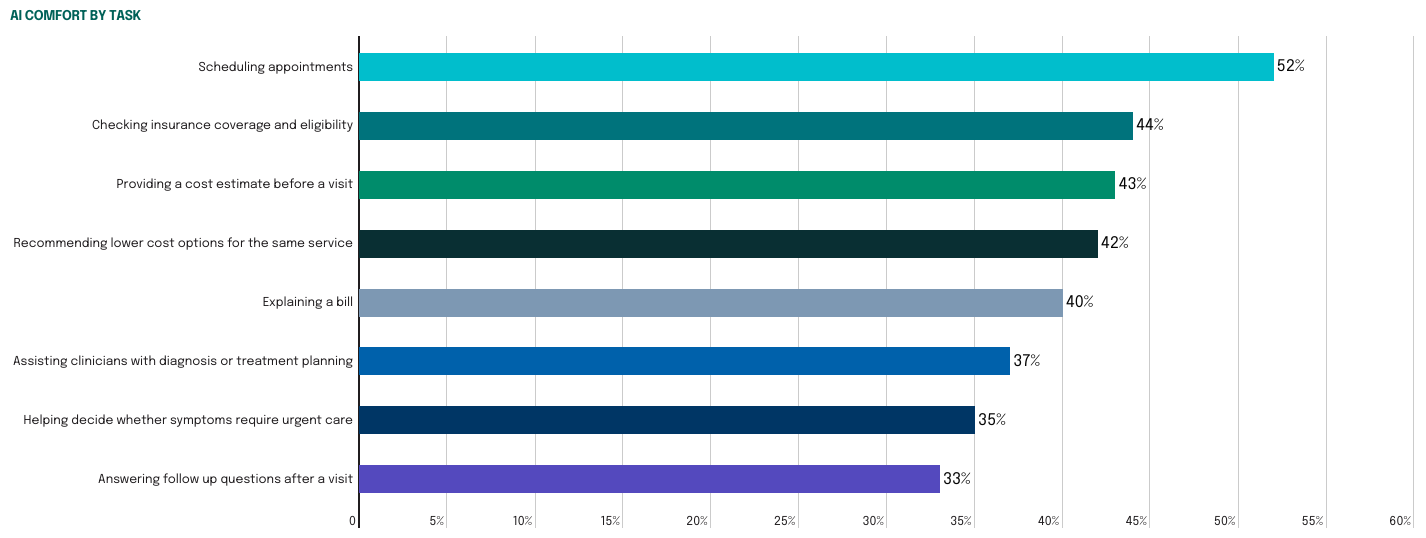
Source: Sogolytics, The AI Cost Tradeoff in Healthcare, 2026
Cost Savings are the Wrong Argument
The default case for AI in healthcare administration is economic. Reduce overhead, lower costs, pass savings to patients. It’s a logical argument. It’s also largely falling on deaf ears.
More than a third of patients say no financial incentive would make them comfortable with AI handling their billing. For that group, which skews older and is more likely to rely on Medicare and Medicaid, the barrier isn’t price. It’s something harder to solve with a discount.
What actually moves patients? Knowing a human is still reachable. Knowing someone is accountable if something goes wrong. Knowing the system hasn’t been optimized to the point where they’re on their own. These aren’t technology concerns. They’re relationship concerns.
The Real Opportunity for AI in Healthcare
AI has a genuine role to play in fixing what’s broken about the healthcare administrative experience. The Sogolytics findings don’t argue against that. What they argue against is the assumption that patients will follow the business case. The organizations most likely to get this right are the ones willing to lead with trust, and treat the technology as a means to that end, not the end itself.