



Picture this. You join a new gym and most of it lands well. The equipment is solid, the layout works, the location is convenient. There is just one thing that nags at you. The locker room never feels properly clean, and one corner of it in particular puts you off every single time. You never mention it. You are not the type to flag something at the front desk over a feeling. So you start coming in a little less, then a little less, and within a few weeks you have quietly stopped going altogether.
Here is the part that should worry every operator. Your gym never finds out why. On their end you are just another lapsed membership, a number in a churn report, and the staff are left guessing. Maybe it was the price. Maybe it was the commute. Maybe you just lost motivation. The one thing that actually drove you out, that corner of the locker room, never makes it into a single piece of feedback they collect. The real reason leaves with you.
That gap, between the reason on the exit form and the reason in the member’s head, is where retention is won or lost. And it is far more common than most gyms realize.
We surveyed 1,069 U.S. adults about how they set fitness goals, how they experience gym environments, and what ultimately leads them to stay or leave. The findings, published in The Emotional Triggers of Gym Retention, point to a pattern that should reshape how fitness brands think about churn: people join for practical reasons, but they leave for emotional ones.
This piece pulls the threads of that report into a single argument and shows where the intervention opportunities really sit.


Members Join for Cost. They Stay for Comfort.
The motivations that get someone through the door are remarkably consistent. Among people considering membership, 47% point to affordable pricing and 43% point to proximity to home or work. Cost and convenience determine whether joining feels feasible at all.
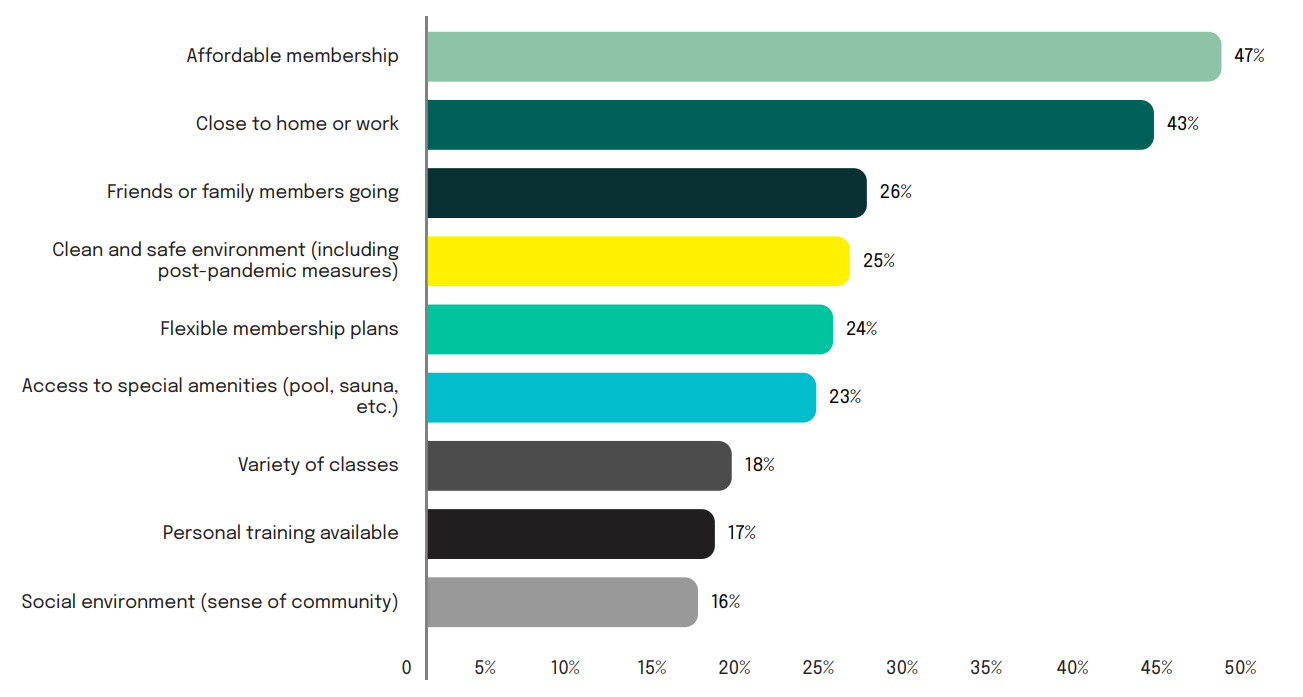
Figure 1: What would motivate people to join a gym. Source: The Emotional Triggers of Gym Retention, Sogolytics.
But the factors that keep members coming back look different. Among current members, continued engagement is shaped not only by location and fees but also by experiential elements: friendly staff (31%), social environment (20%), and accountability (17%). The report frames this directly as the join versus stay gap. Practical conditions encourage people to join. The experience of the environment decides whether they stay.
This distinction matters because it changes what you measure. A gym optimizing only for price and location is optimizing for acquisition, not retention. The retention equation the report lands on is broader:
Retention = Convenience + Cost + Emotional Safety + Accountability
When these elements align, members maintain consistent routines. When one weakens, disengagement follows.
Motivation Fades Earlier Than Most Programs Expect
The first vulnerability shows up fast. Among respondents new to exercise, 31% lose motivation within the first few weeks, and another 10% within the first month. For gyms, this means the retention battle often begins before a habit has even formed.
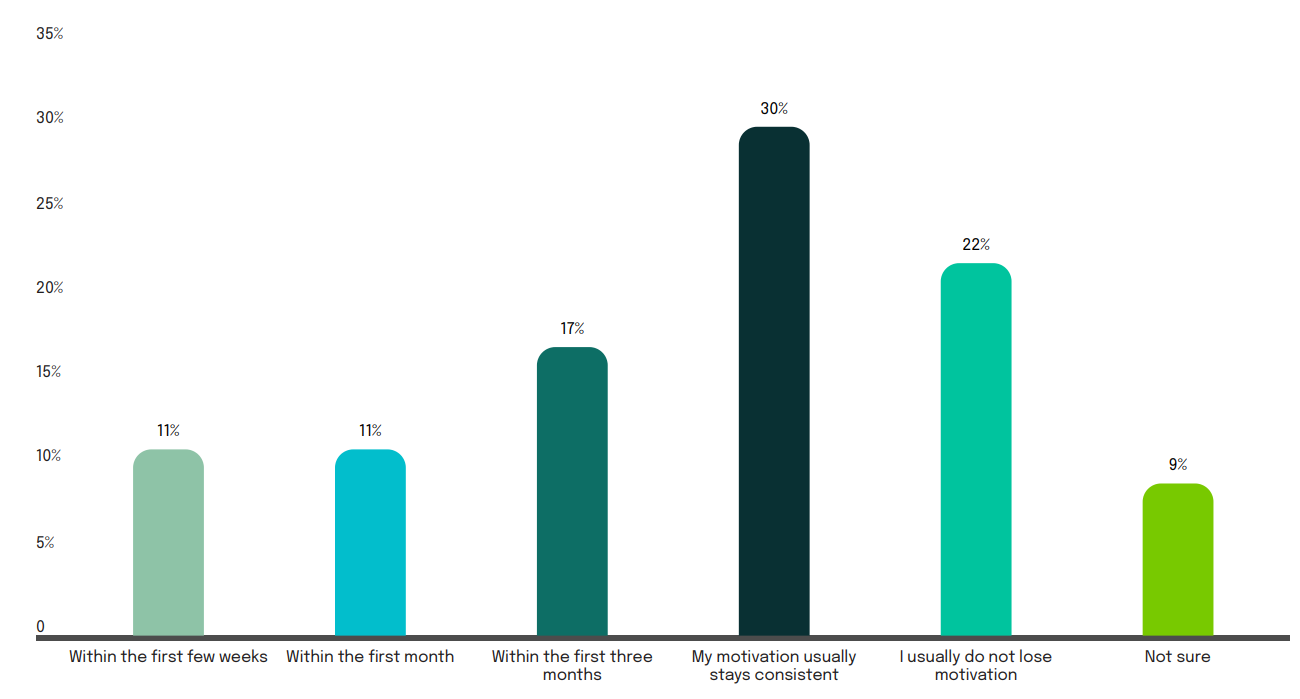
Figure 2: When motivation typically begins to decline after setting a fitness goal. Source: The Emotional Triggers of Gym Retention, Sogolytics.
Experience changes the picture. Among people who exercise regularly, 43% say their motivation usually stays consistent, and among advanced exercisers, 46% report rarely losing it. Beginners, returning exercisers, and occasional participants carry the highest early-decline risk. That is precisely the group most gyms onboard with a wristband and a wave at the front desk.
Hamid Farooqui, Sogolytics Co-founder and CEO, framed this early window as the moment that matters most in a recent CX Insights interview:
“The first six months of a member joining is golden for you.”
His point is that the standard satisfaction survey arrives too late to protect that window. A member who is quietly losing momentum in week three will not be rescued by an NPS question in month six.
Use Case: The Silent Week-three Drop-off
Consider a member who signs up in January with strong intent, attends four times the first week, twice the second, and then disappears. No complaint. No cancellation. Nothing in the system flags it because the membership is still active and paid.
This is the scenario the report describes as retention being decided long before a membership is cancelled. A program built to catch it would trigger a check-in inside the first 30 days, not wait for a renewal date. The signal is behavioral, and it is available weeks before the financial outcome shows up.
The Exit Form Lies, and the Data Proves It
Ask former members why they left, and the answer looks tidy. Among people who left a gym in the past year, 35% cite expensive fees, 27% switched to home or online workouts, and 21% say the hours did not fit their schedule. Read that list alone, and gym attrition looks like a pricing and logistics problem.
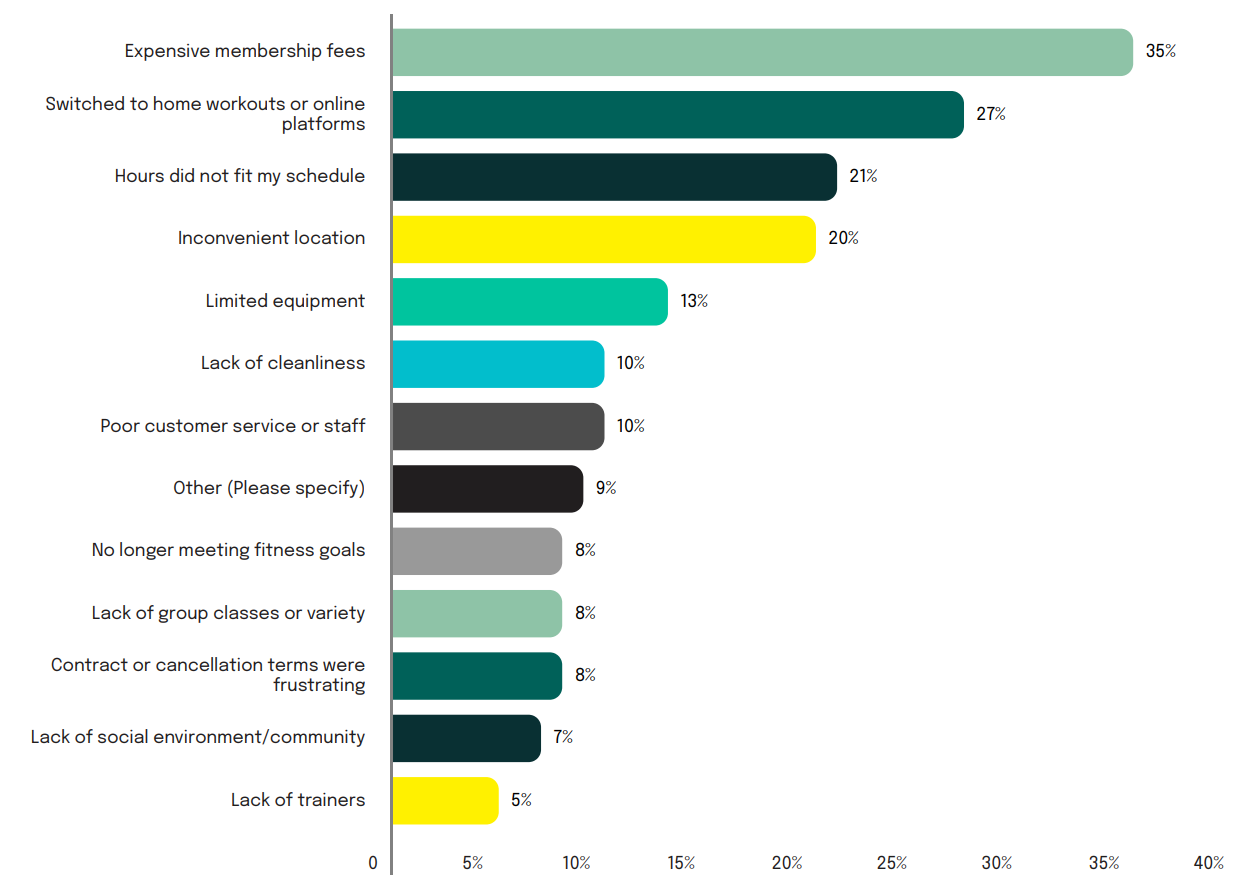
Figure 3: The reasons former members give for leaving their previous gym. Source: The Emotional Triggers of Gym Retention, Sogolytics.
Then look at how those same people describe how the gym actually felt. 27% say crowds made the environment uncomfortable. 21% felt out of place. 16% found it noisy or chaotic, and another 16% felt overwhelmed. 8% felt judged. These are not the words people write on a cancellation form, but they are the conditions that made the cost feel no longer worth it.
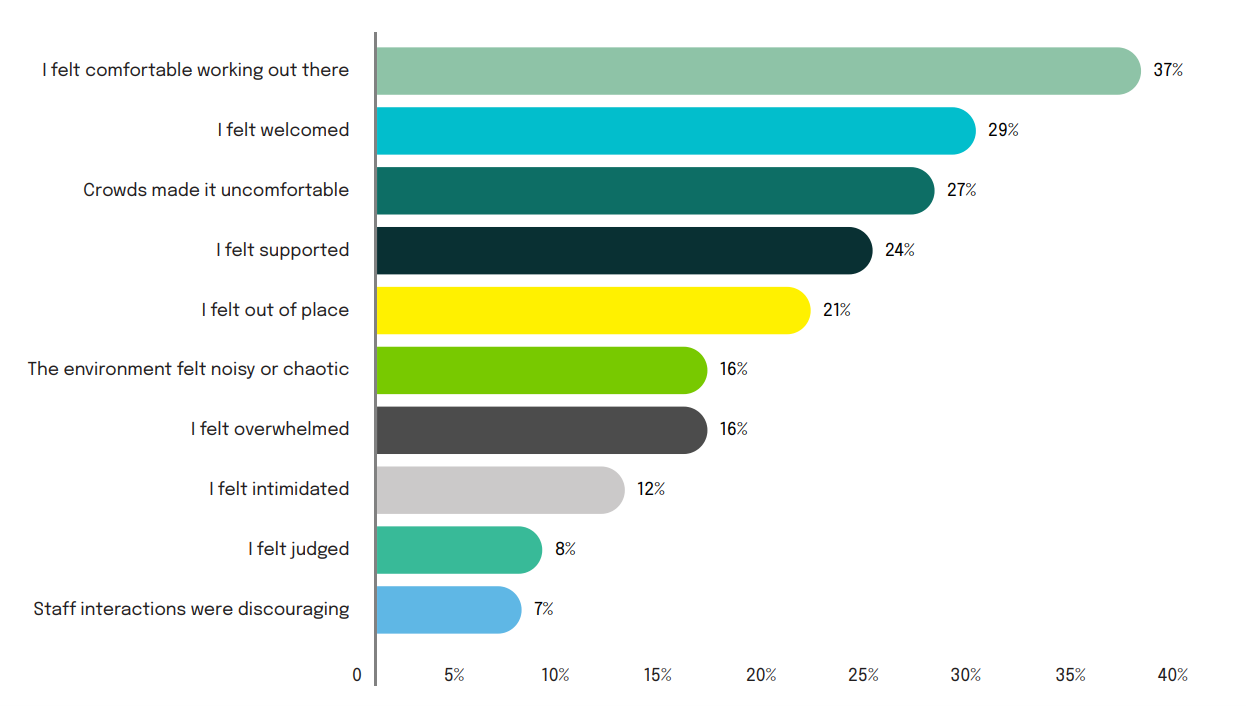
Figure 4: How former members describe the emotional experience of their previous gym. Source: The Emotional Triggers of Gym Retention, Sogolytics.
The report captures this in the open-ended responses. One participant described a gym where “it got very busy in the evenings, and I didn’t like that.” Another said they “were always stared at” and felt self-conscious as a result. Individually, these are anecdotes. In aggregate, they are a churn pattern.
“Positive feedback, but they churn not because of you, because of themselves. They’re blaming themselves.”
Hamid Farooqui, Co-founder and CEO, Sogolytics
A member who feels out of place often does not blame the gym. They blame their own discipline, their own body, and their own schedule. So, they cancel quietly and cite price, because price is socially easier to say than “I never felt like I belonged.”
Crowding and Intimidation are Measurable Churn Signals
The report draws two sharp lines between emotion and attrition. Among current members, 45% say crowds make it harder to stay consistent, and nearly half of that group report being somewhat likely or likely to leave within six months. Separately, members who feel intimidated while working out are roughly twice as likely to plan an exit as those who do not.
These are not soft sentiments. They are leading indicators that correlate with cancellation intent, and they are detectable through the right questions at the right moment. The challenge is that most feedback programs ask the wrong question at the wrong time, surfacing facility complaints from long-tenured members while missing the comfort signals from newer ones who are already drifting.
Use Case: Turning a Comfort Score into an Intervention
Imagine a mid-size gym that adds a single comfort question to its first-month onboarding flow: how comfortable do you feel working out here? A member who scores low is not asking for a discount. They may need a quieter time slot, a quick equipment orientation, or an introduction to a small group.
This is the kind of trigger-based response the report’s intervention model recommends, and it mirrors what Hamid describes: noticing the early signal and offering the right help before the member talks themselves out of staying. The fix is rarely financial. It is almost always about belonging.
The Three-pillar Retention Model
The report consolidates its findings into a practical framework gyms can act on. The structure maps cleanly onto where members are most at risk.
The first pillar is catching early motivation decline through first-30-day check-ins, visible progress tracking, and beginner-specific onboarding that helps habits form before motivation fades. The second pillar is reducing emotional friction by designing quieter or beginner-friendly zones, training staff to actively engage new members, and managing peak-hour congestion. The third pillar is strengthening belonging and accountability through small group programs, milestone recognition, trainer continuity, and community events.
The throughline across all three is that none of them are pricing levers. As the report puts it, retention is built through emotional reinforcement, not discounts alone.
This is a Gym Study. But it’s Not Only a Gym Problem.
It would be easy to file these findings under fitness and move on. That would miss the point. The specific numbers belong to gyms, but the mechanism behind them shows up in almost every subscription, membership, and relationship-based business. People sign up for rational reasons. They stay or leave for emotional ones. And the decision to leave is usually made well before it is formally registered.
The pattern is consistent across sectors. The reason a customer gives at the moment of cancellation is rarely the reason the relationship started to fray, and the early warning signs sit in experience data that most organizations are not collecting at the right time.
In financial services, a member rarely closes an account the day they become dissatisfied. They quietly shift direct deposits, stop using the card, and let the relationship go dormant first. By the time the closure request arrives, the emotional exit happened months earlier. The same first-window logic that protects a new gym member applies to onboarding at a bank or credit union, where the first few statements set the tone for the entire relationship.
In healthcare, a patient who feels rushed, unheard, or uncomfortable does not file a complaint. They simply do not rebook, and the practice records it as attrition without ever learning the cause. The emotional discomfort that drives a gym member out the door has a direct analog in the exam room, where feeling unseen quietly erodes loyalty long before a patient switches providers.
In hospitality, a guest who had a friction-filled stay often says nothing at checkout and everything in an online review weeks later. The gap between the polite “everything was fine” at the desk and the real sentiment expressed afterward is the same gap the gym report exposes between the exit form and the actual reason.
The throughline is that practical factors get people in the door across every one of these industries, while emotional experience determines whether they come back. A bank competes on rates the way a gym competes on price, but it retains on whether customers feel valued. A clinic competes on convenience and coverage, but it retains on whether patients feel cared for. The retention equation the report names for gyms, convenience plus cost plus emotional safety plus accountability, is really a customer experience equation that holds well beyond fitness.
That is why this report is worth reading even if you have never run a gym. The setting is fitness, but the lesson is about catching the emotional signals of churn early enough to act, and that lesson travels.
Conclusion
The operational takeaway is that retention is a customer experience problem, not just a sales or facilities problem, and that is true whether the relationship is a gym membership, a bank account, a patient panel, or a hotel loyalty program. The signals that predict churn live in how members feel during their first weeks, and they are invisible to any program that only measures satisfaction after the fact.
A modern customer journey approach treats any membership or relationship as a sequence of moments, each with its own right question. Onboarding asks about comfort and confidence. The mid-tenure point asks about facilities and value. A voice of customer program captures the open-ended language that turns a vague worry into a specific fix. And metrics like Net Promoter Score become genuinely useful once they are timed to a stage where the member actually has an informed opinion to share.
For teams who want to move from diagnosis to action faster, Experience Navigator helps translate retention goals into a structured measurement plan built around your specific business model and member journey. The point is not to survey more. It is to listen at the moments that decide whether someone stays.
Members rarely leave a gym only because of the cost. They leave when the experience stops feeling worth that cost. The brands that win retention are the ones measuring that feeling while there is still time to change it.
What early signal does your current feedback program miss most, and what would it take to catch it sooner? Talk to us.
Frequently Asked Questions
Why do gym members really cancel their membership?
Survey data shows members most often cite expensive fees (35%), switching to home or online workouts (27%), and scheduling conflicts (21%). However, the same members describe emotional factors behind the decision, including feeling crowded (27%), out of place (21%), or overwhelmed (16%). Practical reasons trigger the cancellation, but emotional discomfort often drives the disengagement that precedes it.
When do gym members lose motivation?
Motivation fades earlier than most operators expect. Among people new to exercise, 31% lose motivation within the first few weeks and another 10% within the first month. Experienced exercisers are far more stable, which makes beginners, returning members, and occasional participants the highest-risk group for early churn.
What is the difference between why people join a gym and why they stay?
People join primarily for practical reasons such as affordable pricing (47%) and convenient location (43%). They stay for experiential reasons such as friendly staff (31%), social environment (20%), and accountability (17%). This join versus stay gap means acquisition tactics and retention tactics are not the same thing.
How does crowding affect gym retention?
Crowding is a measurable churn signal. 45% of current members say crowds make it harder to stay consistent, and nearly half of that group report being likely to leave within six months. Managing peak-hour congestion and offering quieter or beginner-friendly zones can directly reduce this friction.
Can gyms predict which members are likely to churn?
Yes, through behavioral and emotional signals. Declining visit frequency in the first month, low comfort scores during onboarding, and feelings of intimidation all correlate with cancellation intent. Members who feel intimidated are roughly twice as likely to plan an exit. Capturing these signals early allows gyms to intervene before a member decides to leave.
What can gyms do to improve member retention?
The report recommends a three-pillar model: catch early motivation decline with first-30-day check-ins and progress tracking, reduce emotional friction through onboarding and environment design, and strengthen belonging through small group programs, milestone recognition, and trainer continuity. Retention is built through emotional reinforcement rather than discounts alone.
Do these retention findings apply to industries other than fitness?
The specific statistics are drawn from a fitness study, so they should not be applied directly to other sectors. The underlying pattern, however, holds widely: customers in banking, healthcare, hospitality, and other relationship-based industries also join for practical reasons and stay for emotional ones, and they typically disengage well before they formally cancel. The lesson about measuring experience early enough to intervene, travels across industries even when the numbers do not.