

Most customer experience programs rest on a comforting assumption. Listen to customers, act on what they tell you, and they will reward you with patience. The latest data complicates that story.
The Sogolytics Experience Index: Customer Edition Q2 2026 tracked more than 3,000 U.S. customers across three measurement cycles. It found that companies are getting better at closing the feedback loop. It also found that the customers who feel most heard are the quickest to leave when the next experience falls short.
That combination reframes what a mature CX program really manages. The goal is no longer to prove you listen. It is to keep delivering once customers know you can.

Feedback is Working Better Than It Ever Has
In Q2, 42% of customers who shared feedback said it led to clear, visible improvements. That is the highest figure recorded across all three cycles of the Index.
The movement at the other end tells the same story. The share who said their feedback led to no change fell from 27% in 2025 to 17%. Those unsure whether anything changed dropped from 15% to 11%.
It means fewer customers are left wondering whether they were heard. Brands are following through, and communicating those actions, more consistently than in earlier periods.
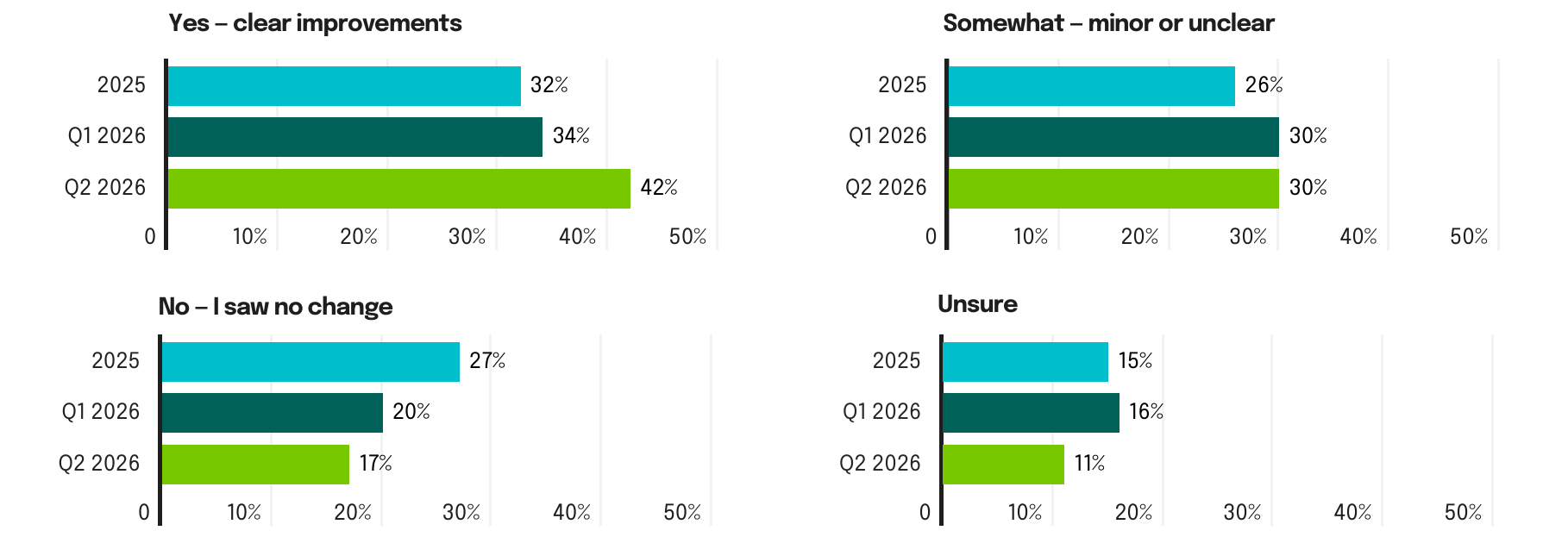
Perceived impact of customer feedback, 2025 to Q2 2026. Source: The Sogolytics Experience Index, Customer Edition Q2 2026.
But Closing the Loop Raises the Stakes
Among customers whose feedback led to clear improvements, 52% say they are likely to switch after a single bad experience. Among those who saw no change, that figure is 34%.
Feeling heard does not make customers more forgiving. It makes them more engaged, and more demanding as a result. A resolved complaint resets the baseline rather than banking goodwill against the next failure.
For CX teams, the return on listening is real but conditional. Acting on feedback wins engagement. Sustaining quality is what converts that engagement into retention.
The Tension Beneath the Numbers
Satisfaction slipped even as follow-through improved. Satisfaction with the most recent experience fell from 77% in Q1 to 69% in Q2, and overall satisfaction eased to 63%, still above 2025 levels.
That is the paradox in one line. Customers are more likely to see their feedback acted on, and less easy to satisfy at the same time. Rising responsiveness is meeting rising expectations, not resetting them.
The Loyal Middle is Disappearing
Loyalty itself is polarizing. The share of customers who described themselves as somewhat loyal fell from 43% in Q1 to 32% in Q2, the largest single-quarter shift in any loyalty category across the study.
The movement split in two directions. Very loyal customers rose from 31% to 35%, surpassing the 2025 level. At the same time, the neutral group grew from 20% to 25%, and the combined disloyal share edged up to 8%.
This is not a broad decline in loyalty. It is a hollowing out of the middle. Customers are becoming more decisive, either committing to brands or pulling back from them.
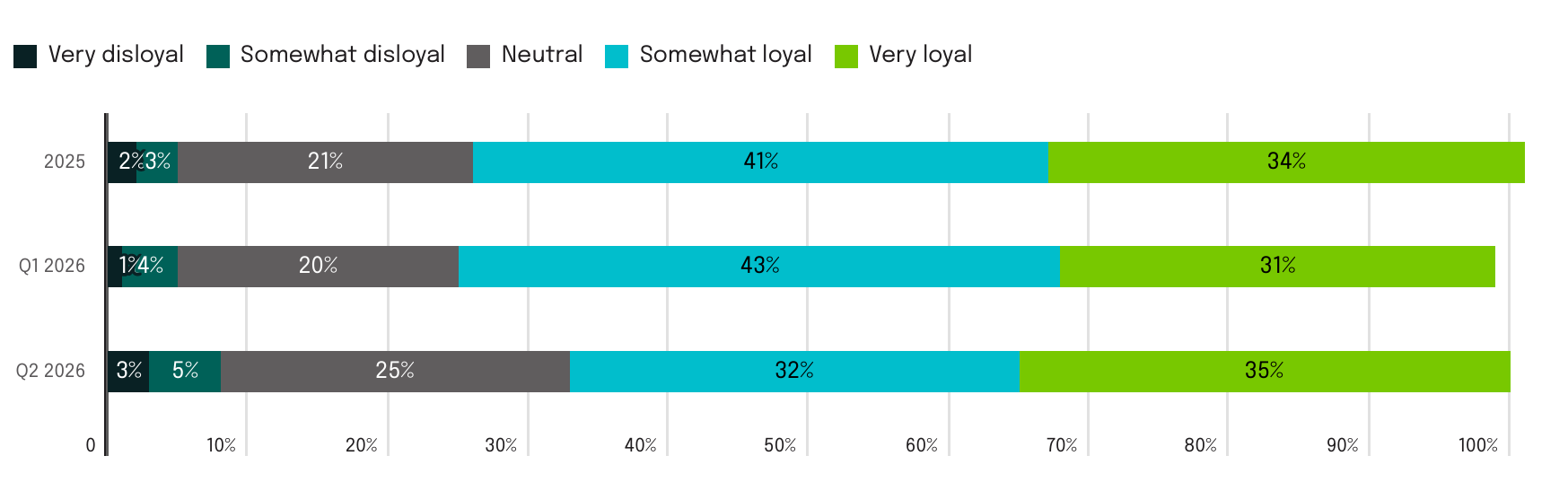
Customer loyalty levels, 2025 to Q2 2026. Source: The Sogolytics Experience Index, Customer Edition Q2 2026.
Switching Risk is Concentrating, Not Shrinking
Overall, the switching intent looks stable. One-third of customers (33%) say they are likely to switch after a single bad experience, back to the 2025 level after a Q1 rise to 37%.
The composition underneath has changed. The share who are somewhat likely to switch fell from 26% to 20%, while those very likely to switch rose from 11% to 13%.
Fewer customers are on the fence. More are firmly prepared to leave. The customers at greatest risk of churning now make up a larger share of the total, even though the headline number held steady.
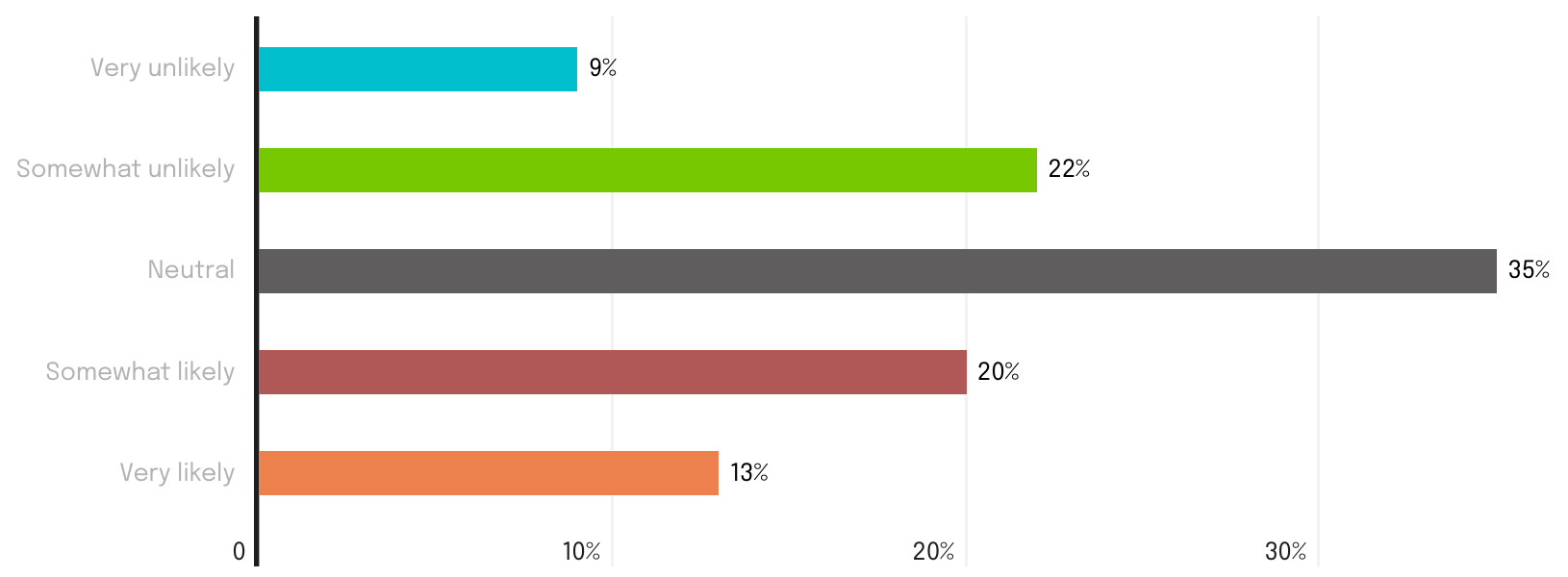
Likelihood to switch after a negative experience, Q2 2026. Source: The Sogolytics Experience Index, Customer Edition Q2 2026.
What Earns Loyalty Now
The fundamentals still carry the most weight. In Q2, affordability and pricing led as the top long-term loyalty driver at 19%, followed by product or service quality at 18%, customer service quality at 16%, and trust and transparency at 14%.
Personalization is the factor to watch. The share of customers naming personalized, relevant experiences as their primary loyalty driver rose from 6% in 2025 to 9% in Q2. It remains secondary to value and quality, but its steady climb signals rising expectations for experiences that reflect individual needs.
The pattern points in one direction. Customers who feel heard expect the relationship to keep improving, and personalization is becoming part of how they judge whether it does.
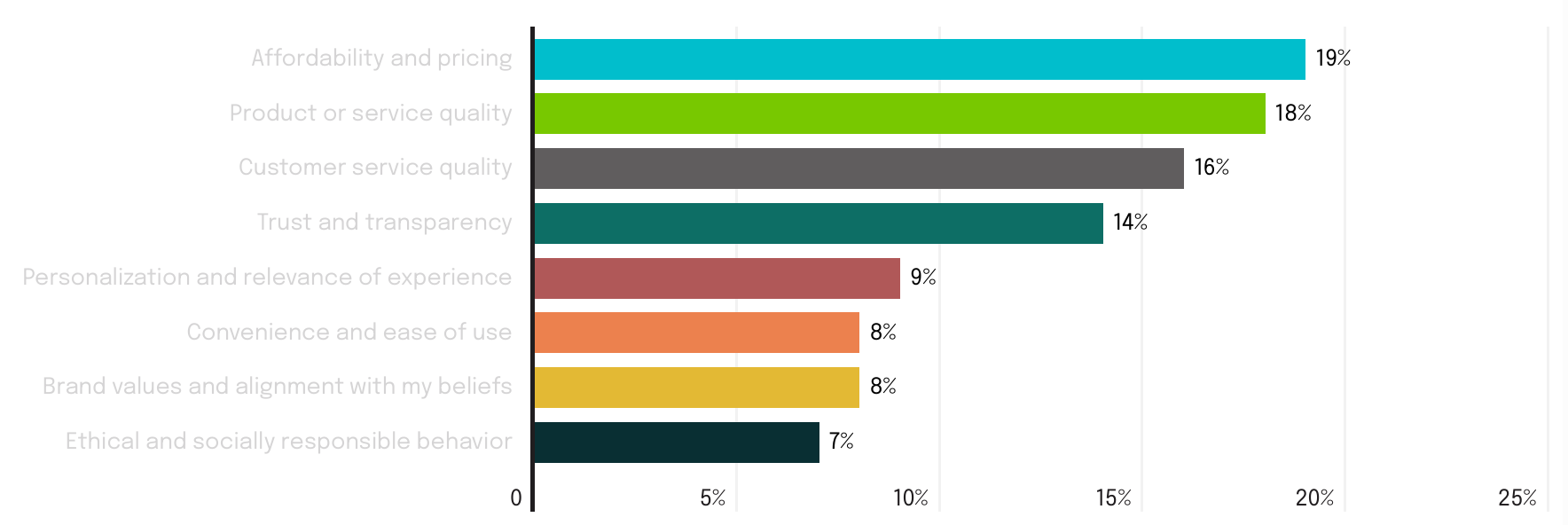
Drivers of long-term loyalty, Q2 2026. Source: The Sogolytics Experience Index, Customer Edition Q2 2026.
Use Case: Turning the Loop into Retention
Consider how this plays out in practice. All In Credit Union used SogoCX to collect and act on member feedback and grew its Net Promoter Score by more than 20 points. As Laurie Flanders of All In Credit Union described it, “SogoCX has changed everything about how we collect and act on feedback from our members and teams.”
The lesson maps directly to the Q2 data. The value was not gathering more feedback. It was acting on it visibly, then holding the improved experience steady, so members kept a reason to stay engaged.
The same logic applies across sectors. A retailer that resolves a delivery complaint and confirms the fix earns a more engaged customer and inherits a higher standard for the next order. A bank that redesigns a slow process based on member input raises expectations for every interaction that follows.
What this means for CX teams
Three implications follow from the Q2 Report findings.
Measure loop closure and post-resolution quality together
Closing a ticket is a milestone, not an outcome. The customers you just satisfied are now watching more closely, so track how the next few interactions perform, not only whether the issue was resolved.
Protect the middle before it moves
The somewhat loyal segment is where the largest shifts are happening. Identify these customers early through journey data and act before they resolve into commitment or exit.
Treat personalization as a retention lever, not a campaign tactic
Its rise as a loyalty driver suggests customers increasingly expect the experience to reflect what a brand already knows about them.
Being heard has become table stakes. The brands pulling ahead are the ones that treat every resolved issue as the start of a higher standard, not the end of a problem. Teams still trying to prove they listen are competing on a metric their best customers now assume.
It improves engagement more than it guarantees loyalty. In Q2 2026, 42% of customers who shared feedback saw clear improvements, the highest level on record. Those same customers were also more likely to switch after a bad experience, so acting on feedback raises expectations rather than buying long-term patience.
Because resolving a problem resets the baseline. Among customers whose feedback led to clear improvements, 52% said they are likely to switch after a single bad experience, compared with 34% among those who saw no change. Feeling heard makes customers more engaged and more demanding of the experiences that follow.
The loyal middle refers to customers who describe themselves as somewhat loyal. That group fell from 43% in Q1 2026 to 32% in Q2, the largest single-quarter shift in any loyalty category. Those customers are moving toward either firm commitment or indifference, leaving fewer in the middle.
The fundamentals lead. In Q2 2026, affordability and pricing (19%), product or service quality (18%), customer service quality (16%), and trust and transparency (14%) were the top drivers. Personalization is rising, growing from 6% in 2025 to 9%, which signals higher expectations for tailored experiences.
Focus on the quality of every interaction after a resolution, not just the resolution itself. Use journey data and alerts to spot at-risk customers early, hold service standards steady once a problem is fixed, and make personalization a consistent part of the experience rather than an occasional campaign.
It is an ongoing Sogolytics study that tracks U.S. customer satisfaction, expectations, loyalty, and trust throughout the year using a consistent survey framework. The Customer Edition Q2 2026 is the third cycle, building on the 2025 annual study and Q1 2026, for a combined sample of more than 3,000 customers.