



Air travel is no longer just about getting from one city to another. It is about the entire experience booking, the airport, the cabin, and what happens when something goes wrong.
Travelers are not just comparing fares anymore. They are comparing experiences.


Price Gets the Booking. Experience Wins the Next One.
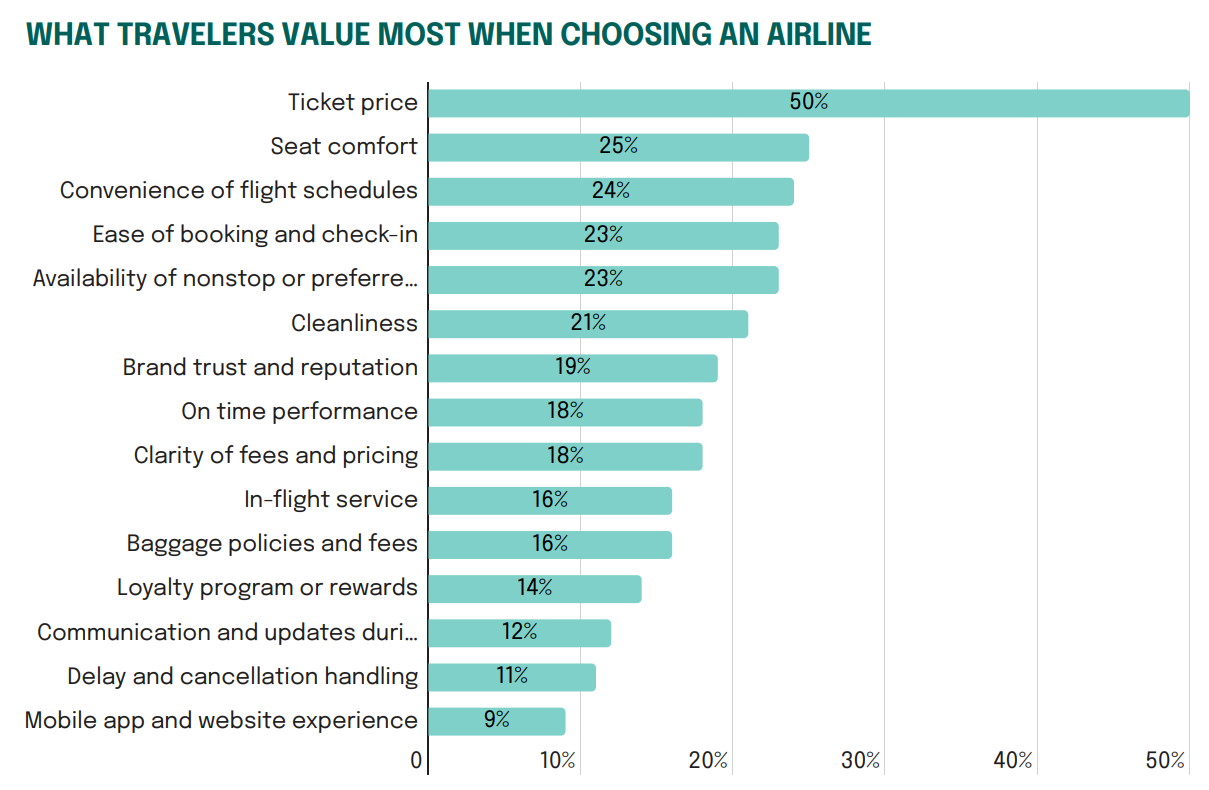
Half of all travelers say ticket prices are their top factor when choosing an airline. The data, however, tells a different story about what keeps them coming back.
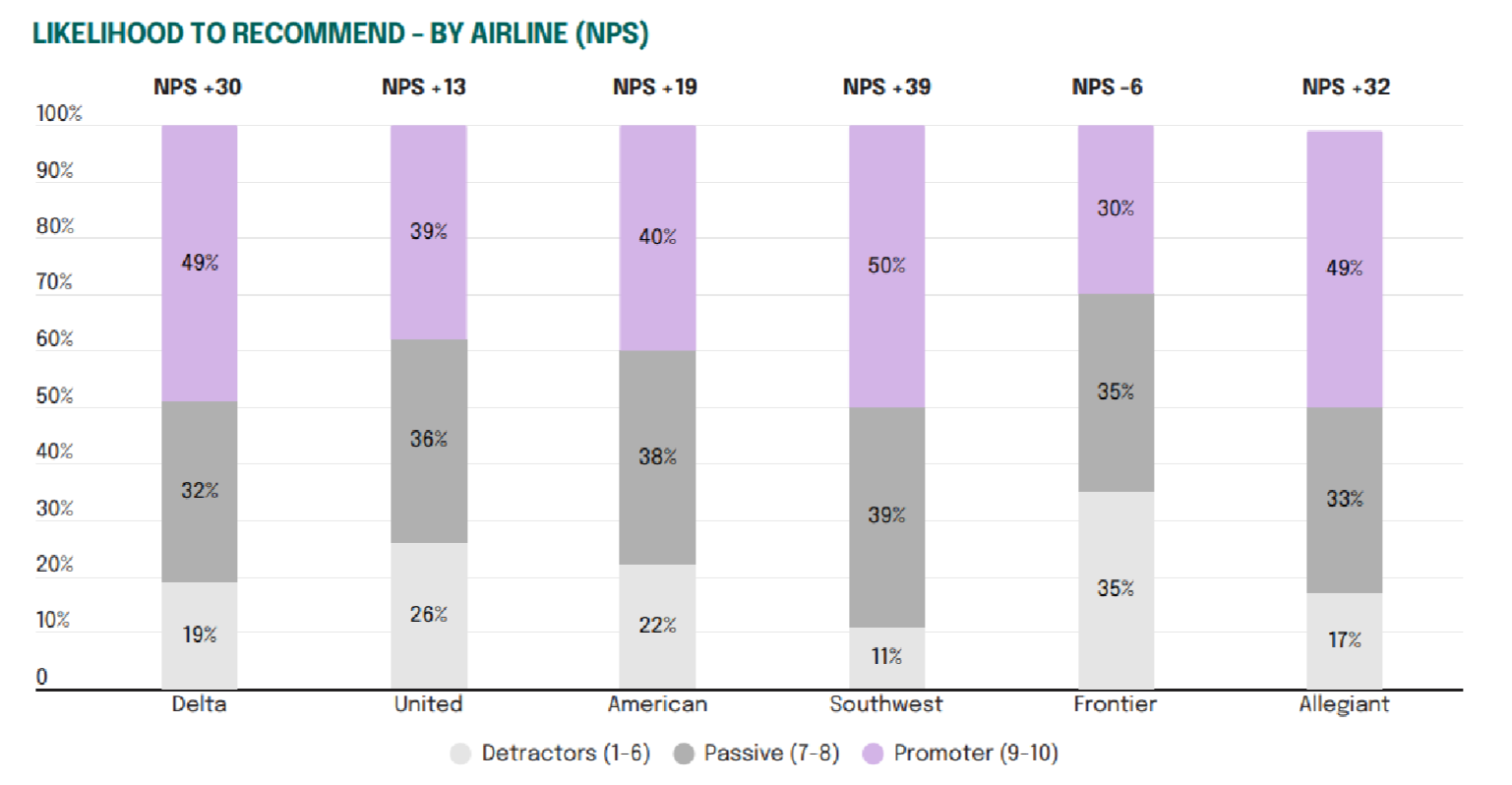
The two cheapest carriers in this study land at opposite ends of loyalty. Allegiant’s NPS is +32. Frontier’s is −6. Two of the cheapest options available. Opposite loyalty outcomes.
This gap is not about the ticket price. It is about experience.
Source: Sogolytics CX Rankings, U.S. Airlines 2026.
What Actually Drives Choice
When travelers choose an airline, their priorities go well beyond what the checkout screen shows.
- 50% cite ticket price as a top factor
- 25% prioritize seat comfort and legroom
- 24% care about flight schedules
- 23% value ease of booking and check-in
- 21% consider cleanliness a deciding factor
Traditional differentiators; rewards, frequent-flyer perks, are not leading the conversation. Reliability, ease, and trust are.
Source: Sogolytics CX Rankings, U.S. Airlines 2026.
The Moment That Moves Loyalty Most
One in three travelers experienced a disruption on their most recent flight. A delay, a cancellation, a missed connection. It happens.
What matters is what happens next.
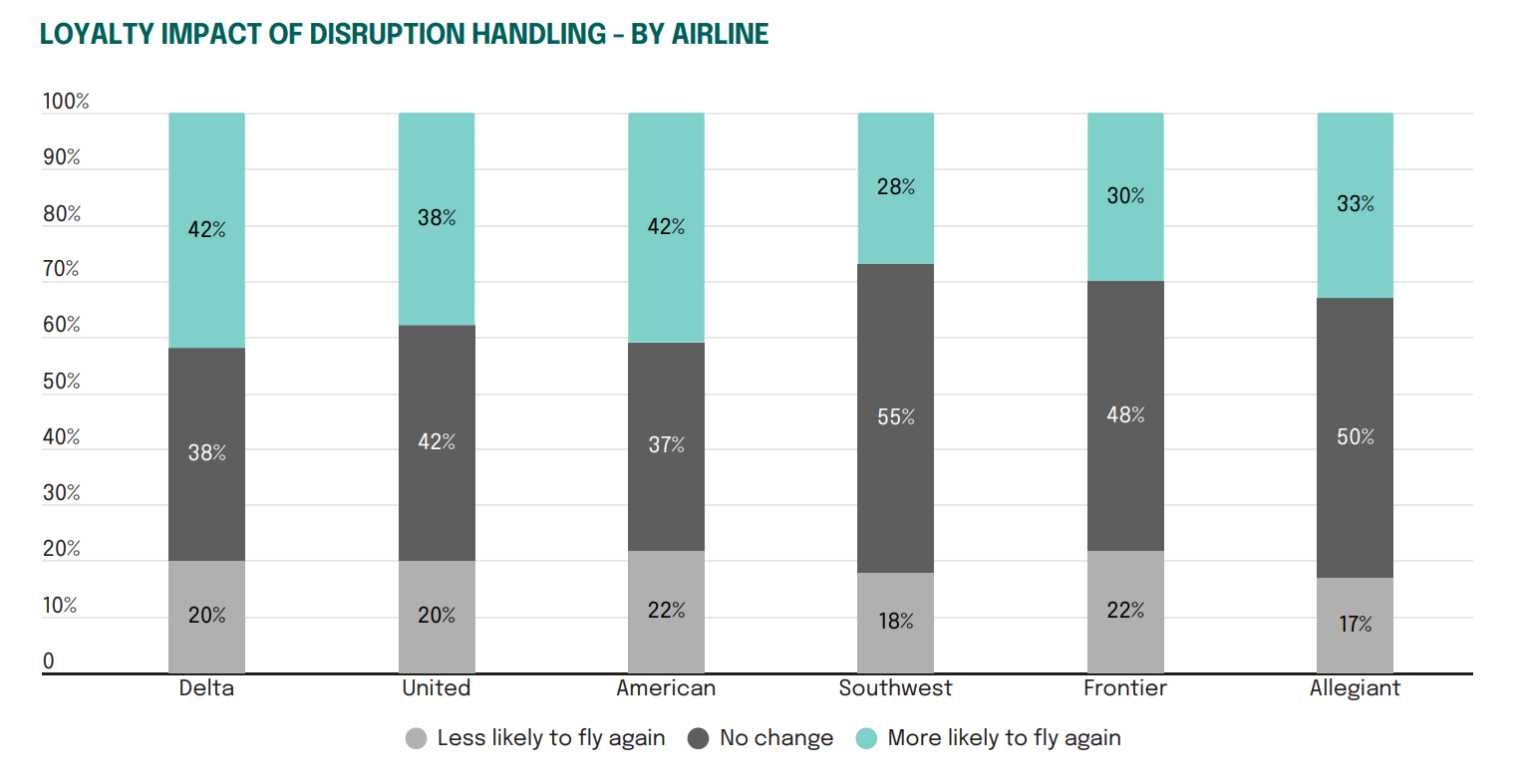
Among disrupted travelers, nearly twice as many became more loyal after a well-handled recovery as became less loyal after a poorly-handled one, 38% versus 20%. Disruption is not just a service failure. It is a loyalty opportunity most airlines are not taking.
Delta and American convert disruptions into loyalty best; 42% of their disrupted travelers said they were more likely to fly again. Frontier converts the least; only 30% of its disrupted travelers said they were more likely to fly again.
Source: Sogolytics CX Rankings, U.S. Airlines 2026.
Two Airlines in One Journey
One of the most striking patterns in the data is how the journey splits in two.
Frontier, Allegiant, and Southwest dominate the pre-flight experience, booking, check-in, boarding, and real-time updates. In the cabin, the legacy carriers take over. Delta, American, and United, along with Southwest, win every single in-flight dimension. Frontier and Allegiant win zero.
Southwest is the only carrier strong on both halves of the journey. That helps explain why it leads on overall satisfaction (89%), NPS (+39), and likelihood to fly again (91%).
Why This Matters Now
Customer experience has become the primary competitive advantage in U.S. aviation. When fares are similar and routes overlap, the experience is what differentiates one airline from another.
Frequent flyers already know this. They weigh price 18 points lower than occasional flyers, shifting toward in-flight service, reliability, and loyalty programs instead. The longer someone flies, the less the fare matters.
The Takeaway
The airlines that win will not be the ones with the lowest fares. They will be the ones that make every step of the journey feel easier than it has to be.
Deliver smooth boarding. Handle disruptions with care. Keep the cabin experience consistent. And when something goes wrong, treat it as a chance to earn a loyal customer, not just close a complaint.
Because in today’s market, the ticket gets you on the plane. The experience decides if you come back.
Frequently Asked Questions
Does ticket price determine which airline travelers stay loyal to?
No. Price drives the initial booking, but it does not predict repeat business. Half of travelers name ticket price as a top factor when choosing an airline, yet the two cheapest carriers in the study landed at opposite ends of loyalty. Allegiant posted an NPS of +32 while Frontier sat at −6. If fare alone earned loyalty, both would lead. The data points to experience, reliability, ease, and recovery, as the real driver of whether a traveler comes back. Price wins the booking. Experience wins the next one.
Why does disruption handling matter so much for airline loyalty?
Because recovery is the highest-leverage moment in the entire journey. Nearly one in three travelers experienced a disruption on their most recent flight. Among them, 38% became more likely to fly the airline again after a well-handled recovery, compared with 20% who became less likely, a net loyalty swing of 18 points. Delta and American convert disruptions best, with 42% of affected travelers more likely to return. Frontier converts the least at 30%. A disruption is not only a service failure. It is an opportunity to earn loyalty that most airlines leave on the table.
Why does Southwest lead the rankings?
Because it is the only carrier strong on both halves of the journey. The data shows the experience splitting in two. Frontier, Allegiant, and Southwest dominate the airport stage, including booking, check-in, boarding, and real-time updates. The legacy carriers, Delta, American, and United, along with Southwest, win the in-flight dimensions. Frontier and Allegiant win none of them. Southwest is alone in delivering across both, which helps explain why it leads on overall satisfaction at 89%, NPS at +39, and likelihood to fly again at 91%. Consistency across the full journey is what sets it apart.
Do all travelers value the same things in an airline?
No, and treating them as one group is a mistake. Priorities shift sharply by segment. Frequent flyers weigh ticket price 18 points lower than occasional flyers, dropping from 57% to 39%, and shift toward in-flight service, reliability, and loyalty programs instead. The longer someone flies, the less the fare matters. Families with children weigh communication higher than solo travelers. The implication for any airline is clear: a single, uniform experience strategy will underserve the travelers who fly most and spend most. Segmenting CX investment by traveler type is no longer optional.
How was this study conducted?
Sogolytics surveyed 1,014 U.S. travelers who took a domestic flight on a major U.S. airline within the past 12 months. Participants evaluated their most recent flight across the full journey, from booking through baggage claim, rating six carriers, Delta, United, American, Southwest, Frontier, and Allegiant, on 21 customer-experience dimensions. Those dimensions span airport and pre-flight, in-flight experience, disruption handling, and outcomes such as overall satisfaction, NPS, and likelihood to fly again. Travelers also indicated which factors mattered most when choosing an airline and how any disruption shaped their future loyalty. The full methodology appears in the report.