



An HR leader can usually pull up the organization’s latest engagement score in a few clicks. Explaining why that score looks the way it does, or spotting which teams are about to lose good people, is much harder. That space between a number and a decision is where a lot of employee experience (EX) work gets stuck.
In my conversations with HR leaders about EX, one practical goal keeps coming up: how to move past a once-a-year score and build a clear, ongoing picture of how people experience their work, and how that changes over time. Getting there depends more on the thinking behind the work than on the software.
What HR Leaders Are Really Trying to Solve
The HR leaders I talk with tend to fall into two groups.
- Teams with a mature feedback program that is not paying off. They collect plenty of data, but the insights are thin, or the findings sit in a report that no one acts on.
- Teams with a simpler setup, often a single annual survey, who want to grow beyond it without piling on extra work.
Your First Step: Understand What Needs to Change
When I speak with HR leaders about EX, I start by understanding the challenges they face and how those challenges affect employees. If a brand has watched several experienced people leave within a few months, HR may need to find out whether workload, manager support, or limited growth is driving the exits. A new HR leader may want a baseline for how supported people feel, so they can see where the experience is strong and where it falls short. And when senior leaders ask for proof that feedback improves retention and engagement, HR has to connect what employees say to real changes at work.
Picture a mid-sized bank with a few thousand employees spread across branches, departments, and regions. Call it Atlantic Bank. People are leaving on their own more often than leadership would like, and the team wants to improve both engagement and retention. The problem is that they cannot say where the real trouble sits. Is it one region? A few managers? A stage in the career path where people stall and start looking elsewhere? They sense something is off, but they do not have a map of what or where.
That is the honest starting point for most EX work. The aim is simple: find the few issues that push people out, in the places where they do the most damage, and fix those first. Extra surveys for their own sake do not help.
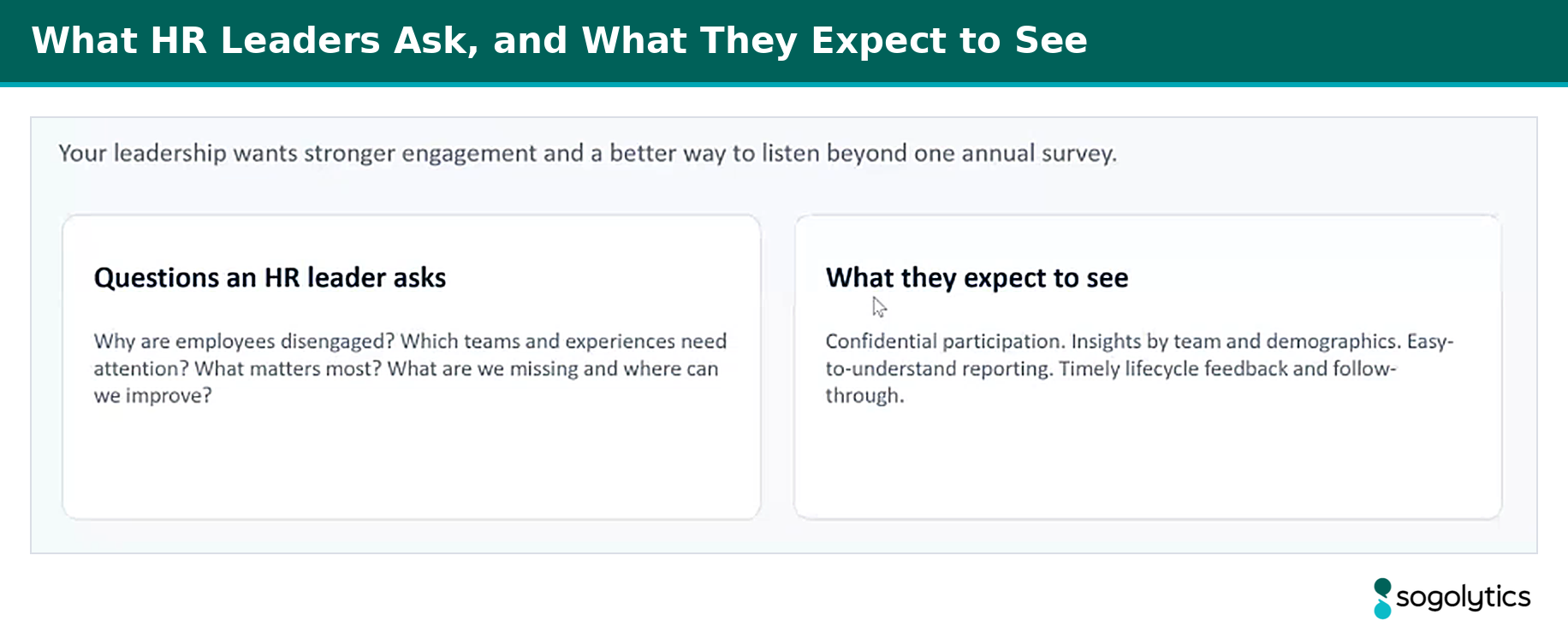
Why EX is Bigger Than One Survey
When people hear “EX,” many picture a single yearly survey. That survey still matters. A well-run annual engagement survey gives leaders a shared baseline and a clean way to compare one year with the next.
An annual survey gives a useful snapshot of how people feel, but it cannot capture every experience that shapes their view over time. People form opinions across their whole journey, from applying and interviewing, through onboarding, growth in a role, changes in management, and promotions, all the way to the decision to stay or leave.
Gathering feedback at these different stages helps HR see what is working and where people hit friction. A candidate who turns down an offer can point to gaps in hiring. Feedback from a new hire after six weeks shows whether onboarding set them up. Someone who resigns can reveal problems with a manager, workload, or growth that would otherwise stay hidden. Looking across these touchpoints helps HR spot broad patterns as well as issues inside a single team or location. Our overview of employee experience framework models shows a few ways to map these stages and how they fit together.
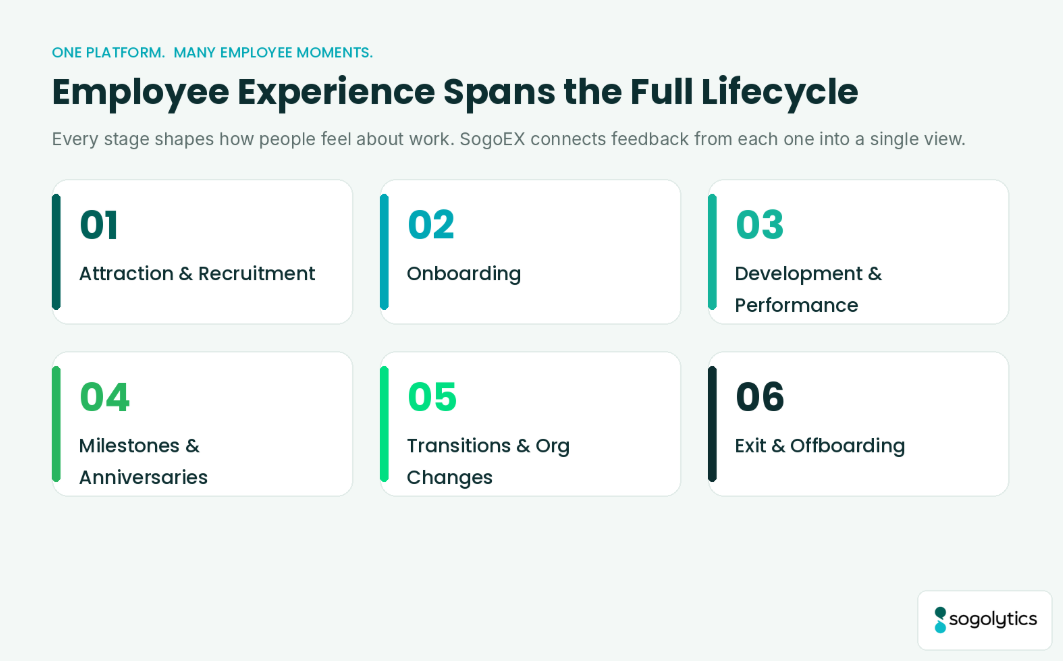
Each of these stages is a chance to gather feedback. Listening at the ones that matter most is what turns a single yearly score into an ongoing read on EX.
An 80% Engagement Score Still Leaves Questions
Say your annual survey returns an engagement score of 80%. That looks healthy, and in many places it would be. But one number raises as many questions as it answers.
Start with the 80% who say they are engaged. The score says they feel good, but not why. It helps to know what is working, so it is worth asking whether they are:
- Satisfied with their managers
- Comfortable raising concerns
- Confident about their growth
Knowing this shows which strengths to protect as the organization changes. The other 20% deserve a closer look. Their answers may reflect frustration, low motivation, or worries that could eventually send them looking for another job, and the overall score will not explain what sits behind their experience.
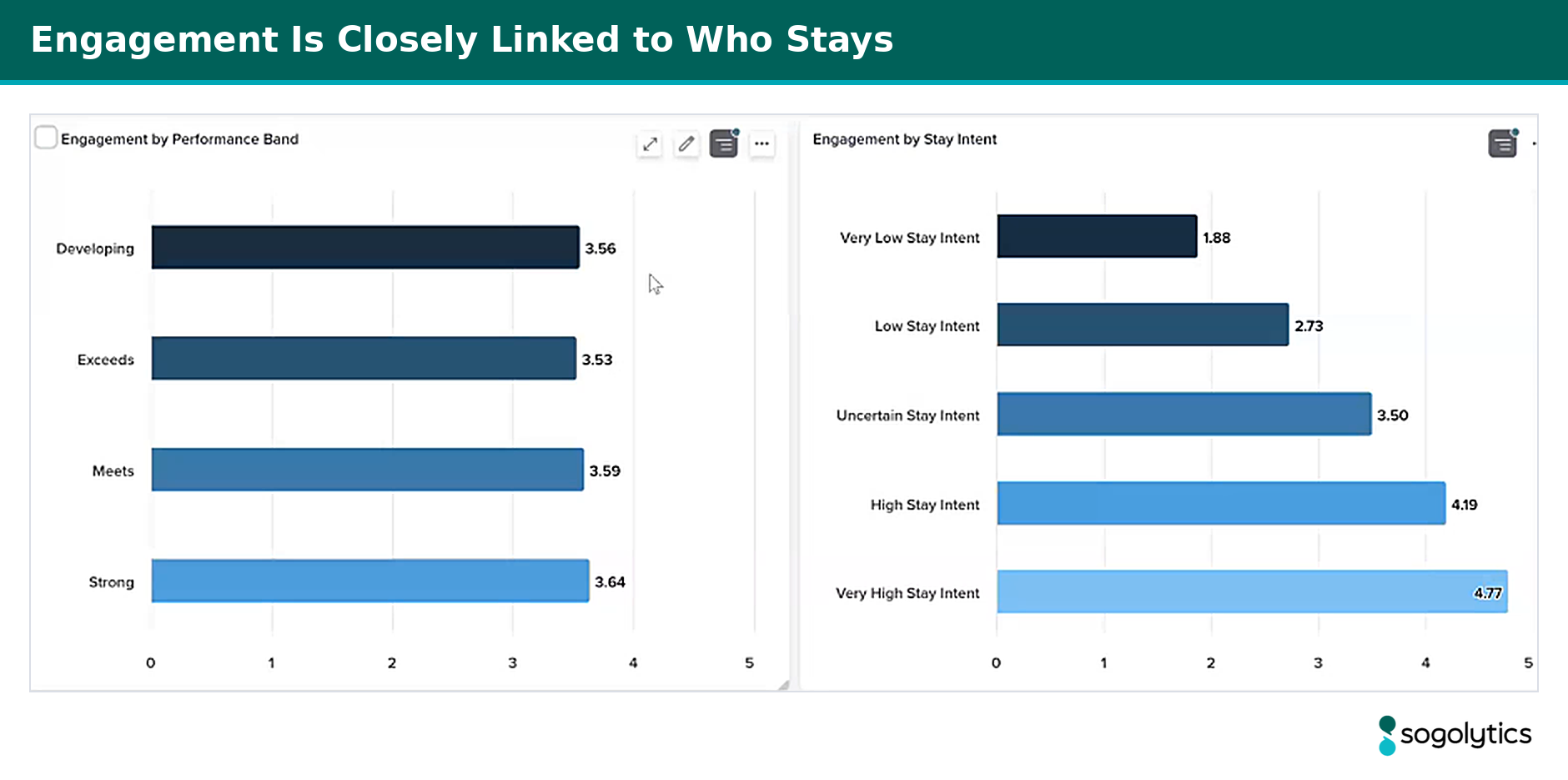
The reasons for disengagement vary. People may feel unsupported by a manager, buried under workloads that never let up, left guessing by patchy communication, or stuck with no clear path to grow. An engagement score on its own cannot tell you which of these matters most, or where to focus.
You also need to know whether a concern is widespread or concentrated in a few teams, locations, or managers. If unclear communication runs across the whole organization, the fix may be how leaders share information. If it sits in a few teams, targeted manager support or workload changes will do more. Knowing where the issue lives helps you respond with the right move rather than the same move everywhere.
What happens after the survey matters as much as the findings. When people share concerns and see no response, they grow less willing to take part next time. Our study on employee engagement surveys looks at how workers react when they feel their input does, or does not, lead to change.
From a Single Score to a Specific Finding
Once I know engagement needs attention, the next step is to find where the problem sits and what is driving it. Looking past the overall average shows the gaps between groups, the patterns worth comparing, and the issues to tackle first. A few methods make this possible without any advanced data skills, and each has a deeper walkthrough on our site.
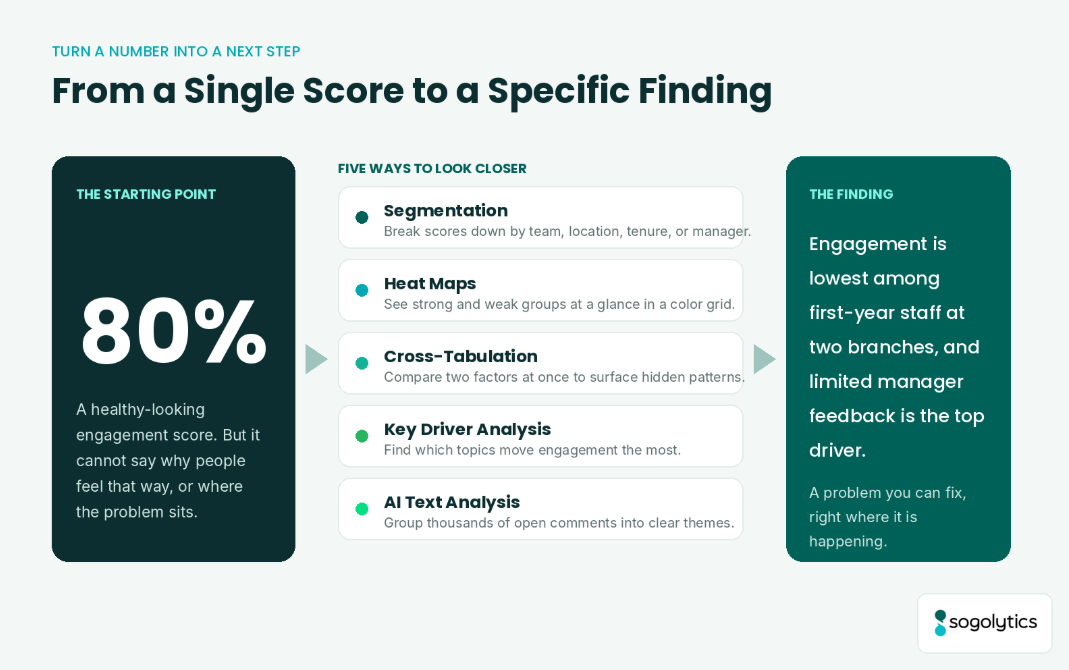
- Segmentation groups responses by things you already track, like department, location, tenure, or manager, so you can compare each group instead of staring at one org-wide number. Heat maps turn that into a color grid where strong and weak groups stand out at a glance.
- Cross-tabulation compares two factors at once, such as engagement by tenure and location together, which surfaces patterns a single view would hide, like new hires struggling in one region but doing fine in another.
- Key driver analysis estimates which topics affect engagement the most. If manager support and recognition carry more weight than perks, you know where to spend limited time and budget.
- AI text analysis reads thousands of open comments and sorts them into themes in minutes, flagging, for example, that “workload” keeps coming up in one division.
Used together, these methods move you from a broad worry to a clear finding. Instead of “engagement is low,” you learn that first-year employees at two branches report the lowest scores, with limited manager feedback as the common thread. That gives you a specific place to start.
When One Snapshot a Year Stops Being Enough
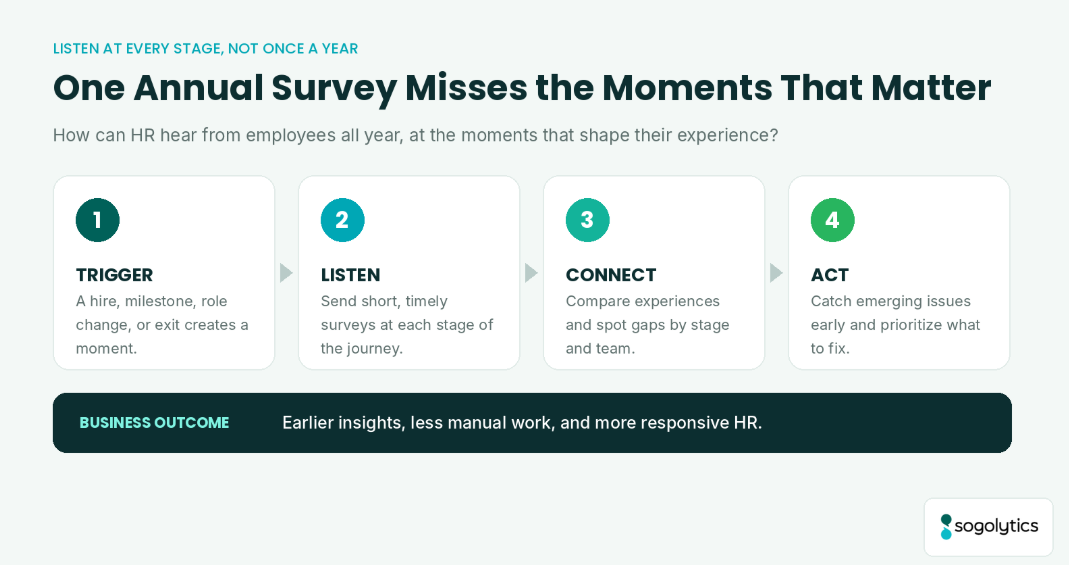
Different stages of the journey call for different feedback, and each survey should answer a question you can act on. An annual survey gives a org-wide view of engagement, manager support, recognition, and career growth, which can shape big priorities like leadership training, workload policy, or development programs. If you are weighing a broad annual census against more frequent surveys, our census vs. survey comparison lays out the trade-offs.
More focused surveys handle specific moments. An onboarding survey after a new hire’s first month can expose gaps in training, unclear responsibilities, or thin manager support, and if several new hires report the same thing, you can fix the process. Quarterly pulse surveys track whether earlier concerns are easing. Check-ins at 30, 60, and 90 days help managers solve individual problems before they affect performance or the decision to stay.
Exit surveys serve a different purpose, showing why people leave. If answers keep pointing to limited career opportunities or poor manager relationships, you can check whether the problem runs wider and feed that into retention work.
The important part is connecting each finding to a response, then checking whether that response made a difference. When surveys have a clear purpose, you gather feedback you can use, involve the right people, and measure progress with the next check-in. That also keeps surveys short, which respects employees’ time while still giving you what you need to steer through the year.
How Real Brands Put Lifecycle Listening to Work
BGIS, a global facilities management brand with around 9,000 employees, relied on an annual engagement survey for more than a decade. Its tool could not support other kinds of feedback, so the people team had no easy way to hear from employees during onboarding, in regular pulse checks, or at other key moments.
The organization moved to an EX platform that collects feedback across the lifecycle, including onboarding and exit interviews, which gave the team a read on employee needs at each stage. That flexibility mattered during the pandemic, when BGIS launched re-occupancy surveys within days to understand how people felt about returning to the workplace, and those findings informed executive decisions. You can read the full BGIS case study.
Employee feedback can also improve what customers experience. At Embassy Suites by Hilton, listening to staff helped the organization see how supported and engaged people felt, which matters because the way employees are treated shapes the service guests receive. Spotting where staff need better support gives leaders a chance to fix workplace issues that also affect guest satisfaction. The Embassy Suites case study has more.
Both examples show feedback guiding decisions well beyond an annual review. The lesson I take from them is simple: choose feedback methods that fit the moment, and make sure the findings lead to real decisions.
Conclusion
Come back to Atlantic Bank. If its engagement score is slipping, leadership needs more than the overall trend to know where to step in. A closer look might show that resignations cluster among second-year employees, that limited career growth is the common complaint, and that two regions account for most of the losses. The same principle holds everywhere: better retention starts with understanding what people are experiencing and where they need support most. When you connect feedback to specific concerns, you can prioritize the right changes, bring in the right people, and track whether those changes improve the experience.
For EX teams, that means pairing a broad engagement survey with focused check-ins across the journey. Use segmentation and key driver analysis to find where attention is needed, and text analysis to hear the reasons behind the scores. Most important, tell employees what changed because of their feedback. When people see that their input shapes decisions, feedback becomes part of how the workplace gets better.
Do you know what is driving your engagement scores, and where to focus first? That is the kind of question I work through with HR teams every week. See how SogoEX supports the full employee lifecycle.
Engagement is how committed and motivated people feel in their work, often captured as a score. Employee experience is broader. It covers every stage of someone’s time at your organization, from the first interview to the last day. Engagement is one important part of that larger experience.
Yes. A well-built annual survey gives you a deep, organization-wide baseline and a clean year-over-year comparison. The point is not to drop it, but to stop treating it as the only source of feedback and to add lighter check-ins around it.
Continuous listening means gathering feedback at regular points through the year rather than only once. Done well, it is light: a short onboarding survey, a few quarterly pulse questions, a check-in after a big change. It respects people’s time and tends to build trust, as long as you act on what you hear.
It is a way of working out which topics have the biggest effect on overall engagement. Instead of guessing, you can see that, for example, manager support and recognition influence your score more than office perks do. That tells you where to focus first.
Begin by adding one or two listening points at the moments that matter most, such as onboarding and exit. Keep them short. Then use segmentation to break results down by team and location so you can see where issues concentrate, and share back with employees what you plan to change.